



What Influences the Cost of a Metal Roof
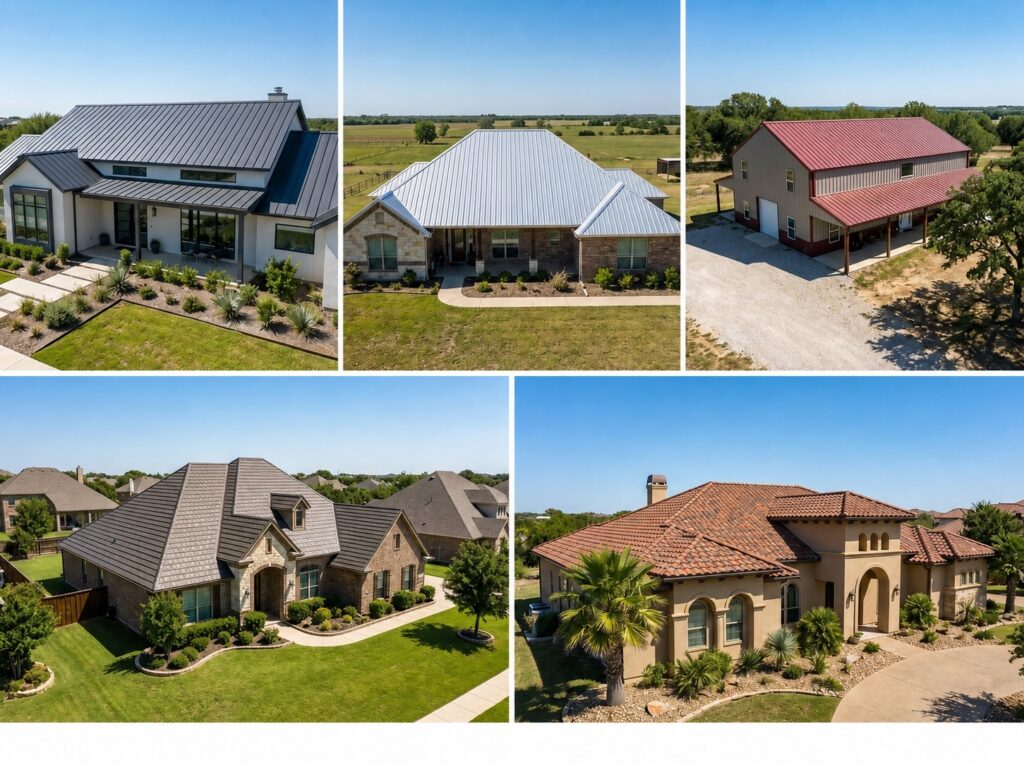
The cost of a metal roof depends on several factors, including the type of metal, the style of panels, the size and shape of your roof, and local labor rates. Unlike asphalt shingles, metal roofing costs vary more widely because materials differ significantly in price and performance.
When roofing professionals estimate a job, they consider:
The total area of the roof
Roof complexity and pitch
Material type (for example, steel vs. aluminum vs. copper)
Removal of the old roof (if necessary)
Accessories like trim, underlayment, flashing, and ventilation
These elements work together to determine your total cost.
Typical Installed Metal Roof Price Ranges in Texas
(Note: All prices in this article are estimates, and final costs could vary. We recommend that you contact us for a precise price.)
Metal roofing prices generally fall into distinct ranges depending on the material installed:
Steel metal roofing tends to be the most affordable, often priced around $5 to $12 per square foot installed.
Aluminum is a mid-range option at about $9 to $15 per square foot installed, and premium options like copper can run from $20 to $40 per square foot installed.
These per-square-foot ranges include both materials and labor, which is how roofing contractors typically price residential roofing work.
How Those Costs Translate to Real Roof Sizes
To understand what these per-square-foot ranges mean in practical terms, it helps to run the math on real roof sizes.
For a 1,500-square-foot roof:
A steel metal roof might cost roughly $7,500 to $18,000 installed.
An aluminum roof might run about $13,500 to $22,500 installed.
A copper roof could range from $30,000 to $60,000 installed or more.
For a 2,000-square-foot roof:
You could expect $10,000 to $24,000 installed for steel.
Aluminum might be about $18,000 to $30,000 installed.
Copper or other premium metals could start around $40,000 and climb considerably.
These are general illustrations. Your exact cost depends on the material type, the finish you choose, the complexity of your roof, and any extras like insulation, specialty trim, or advanced underlayment.
Material Choices and Cost Differences
Steel Roofing
Steel roofs are widely used because they balance performance and cost. Steel panels or shingles resist impact and wind, and when coated properly they offer good corrosion resistance.
Because steel tends to be less expensive to manufacture and install, it’s often the most cost-effective way to get the benefits of metal roofing.
Aluminum Roofing
Aluminum is a popular choice in Texas, especially in coastal regions where salt air increases corrosion risk. While aluminum typically costs more than steel, its longevity and resistance to rust make it appealing for long-term performance.
Premium Metals
Copper roofing or zinc roofing are premium options prized for aesthetics and longevity. They often exceed standard metal roofing costs substantially. These metals can last a lifetime, but their price reflects rarity and the specialized installation expertise required.
Roof Size and Shape Matter
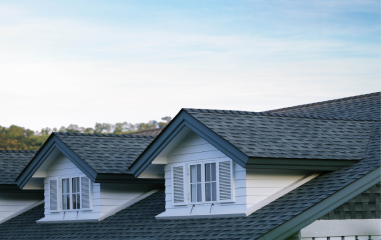
The total area of your roof and its shape have a direct impact on the cost. A simple, low-pitch roof will usually cost less than a large, steep, or architecturally complex roof with many valleys, angles, or dormers.
These features increase labor time and waste more material, which raises the cost.
Roof measurements for contractors are typically done in square feet or squares (where one square = 100 square feet). A professional inspection and accurate measurement are critical before you get a final price.
Removing the Old Roof
If your current roofing needs to be torn off before installing the new metal roof, expect additional cost.
Tear-off work includes labor and disposal fees for old shingles or other roofing materials. In some cases, metal roofs can be installed over existing roofing, but this depends on local building codes, roof conditions, and structural considerations.
Underlayment, Flashing, and Accessories
Your total cost isn’t just panels and labor. It also includes underlayment (which protects your home from moisture), flashings around chimneys and vents, ridge caps, trim pieces, and potentially improved ventilation systems.
These elements may seem minor individually, but they contribute to the roof’s overall integrity and lifespan.
Upgraded underlayment or specialty coatings may add to the upfront cost, but they can increase energy efficiency and performance over time.
Energy Efficiency and Long-Term Value
A metal roof in Texas can deliver energy savings because metal reflects more of the sun’s heat than traditional asphalt shingles. That reflection can reduce attic temperatures and, in turn, the cooling load on your home’s air conditioning system.
Some homeowners report noticeable savings on cooling costs after a metal roof installation. Combined with the longevity of metal roofs — which often outlast asphalt shingles by decades — many see metal roofing as a smart long-term investment.
Insurance and Resale Considerations
Because metal roofs are durable and more resistant to fire, impact, and wind damage, many insurance companies offer premium discounts for homes with metal roofing. Check with your insurer to see if your policy qualifies for savings.
A new metal roof can also enhance resale appeal. Buyers often value a roof that likely won’t need to be replaced for many years, which can be a selling point in competitive housing markets.
Is a Metal Roof Worth the Cost?
Metal roofs typically cost more upfront than asphalt shingles or other roofing materials. However, considering their lifespan, performance in Texas weather, and potential energy savings, many homeowners find the investment worthwhile.
A well-installed metal roof can last 40 to 70 years or more, far longer than most shingle roofs. It also performs well in wind, rain, and sun — conditions many Texas homes experience regularly.
Final Thoughts
A new metal roof is not just a line item in a home improvement budget. It is a long-term decision about how well your home is protected, how much maintenance you want to deal with over the years, and how your roof performs in real Texas conditions.
While cost is an important part of the conversation, it is only one piece of the puzzle. Material choice, roof design, installation quality, and local weather exposure all play a role in determining whether a metal roof is the right fit for your home. For many Texas homeowners, the appeal lies in durability, energy efficiency, and the confidence that comes with installing a roof built to last decades, not just years.
The best way to move forward is with accurate information and a clear understanding of your options. A professional inspection and detailed estimate can help you weigh upfront investment against long-term benefits and avoid surprises down the road.
When installed correctly, a metal roof is more than an upgrade. It is a proactive step toward protecting your home, improving performance, and reducing future roofing concerns in one of the most demanding climates in the country.
M&M Roofing, Siding & Windows has served homeowners across Texas and Louisiana for more than 40 years. Backed by over 100,000 completed home improvement projects, M&M offers expert insight on roofing, siding, windows, gutters, storm damage, and exterior restoration, helping homeowners make confident, informed decisions about their property.