









After a storm damages your roof, the right first call is to a qualified roofing contractor, not your insurance company. A professional inspection provides you with documented, time-stamped evidence of the damage, protects you from filing a weak or unnecessary claim, and puts you in a fundamentally stronger position when the adjuster arrives. Once you have that report, you should file it with your insurer promptly, as most Texas policies require notification within 90 to 180 days of the storm.
The First Call You Make After a Storm Is the Most Important One
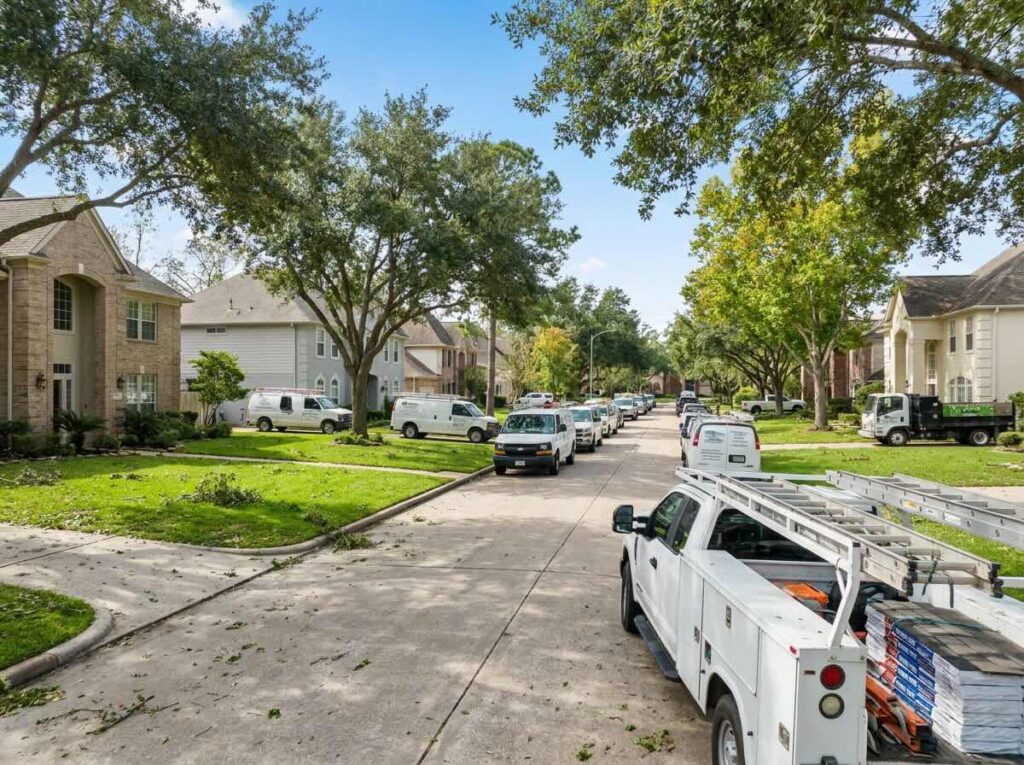
A big Texas hailstorm rolls through. When it’s over, you walk outside and look up at your roof. Your neighbor’s driveway is already crowded with roofing trucks, and your phone starts buzzing with calls from storm-chasers who saw the weather radar and drove straight to your neighborhood.
In that moment of chaos, you’re left with a critical question: do we call our insurance company, or do we find a roofer?
After more than 40 years and over 100,000 completed projects across Texas and Louisiana, we can tell you that most homeowners get this wrong. The instinct is to call the insurance company immediately. It feels responsible. You’ve been paying your premiums every month, a storm hits, and you report it. It makes sense.
The problem is, when you call your insurer without any independent proof of damage, you’re starting the claims process on their terms, not yours. You’re showing up to a negotiation empty-handed. The adjuster will arrive, perform their assessment, and give you a number. And while adjusters are trained professionals, that number may not account for everything required to make your home whole again.
There’s a better way: call a trusted, local roofing contractor first. Get a thorough, professional inspection and a documented report with photos. Then, with that evidence in hand, file your claim. You still need to act quickly—your policy has strict deadlines. But an independent inspection puts you in a fundamentally stronger, more informed position.
Why a Roofer’s Inspection Report Gives You Critical Leverage
The job of an insurance adjuster is to assess the damage and determine what your policy covers. They work for the insurance company, and while they are trained to accurately identify damage, they are also under immense pressure to work quickly. After a major storm, a single adjuster might handle dozens of claims in a single day.
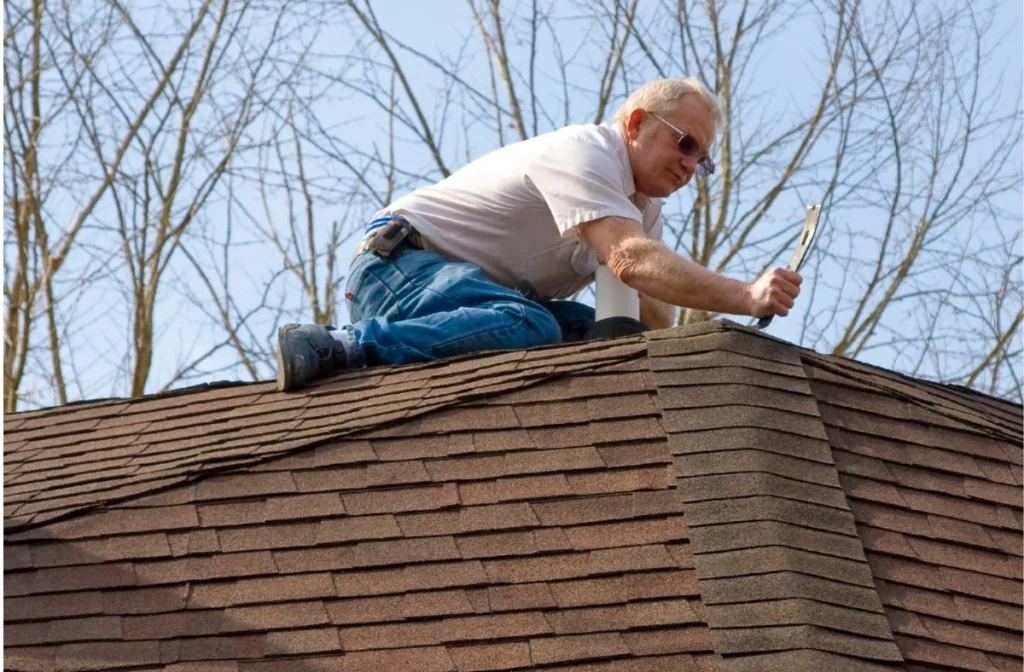
A professional roofing contractor inspects your roof with a different goal: to identify everything that needs repair or replacement to bring your roof back to its pre-storm condition.
Those two goals are not always identical.
Storm damage is often subtle. Hail can create small bruises on asphalt shingles that fracture the underlying mat. Wind can lift the edges of shingles and break the sealant strips that form a watertight barrier. A trained roofer knows how to spot this kind of damage that a hurried inspection might miss.
Texas is the most hail-battered state in the country. In 2024, Texas led the nation in hail damage claims, with insured losses exceeding $1.1 billion [1]. Yet, nearly 47% of Texas home insurance claims were closed without payment [2]. This trend is driven by a combination of factors, but incomplete documentation from the homeowner is a major contributor. A professional inspection report closes that documentation gap by providing time-stamped photos, written descriptions of the damage, and a comprehensive estimate for the full scope of repairs.

This documentation becomes your source of truth throughout the claims process.
There’s another practical reason to get an inspection first: it helps you decide if filing a claim is even worth it. In Texas, it’s common for wind and hail deductibles to be 1% or 2% of your home’s total insured value. For a home insured at $400,000, that means you’re responsible for the first $4,000 to $8,000 of repairs out of your own pocket [3]. If a contractor inspects your roof and determines the damage amounts to $3,500, filing a claim would be a financial mistake. An honest contractor will give you this assessment upfront.
When Does It Make Sense to Call Your Insurance Company First?
While calling a roofer first is the best practice in most situations, there are a few specific exceptions.
- Your Policy Explicitly Requires It: Some insurance policies contain specific language requiring you to notify the company before authorizing any work. Review your policy documents to be sure.
- The Damage is Catastrophic: If a massive tree has crashed through your roof, leaving a gaping hole, the need for a claim is obvious. In these clear-cut cases, calling your insurer to get the claim started immediately is a reasonable step.
- You’ve Already Signed a Contingency Agreement: If a door-knocker has gotten you to sign a contract, you need to contact your insurer right away. Do not let any contractor submit a claim on your behalf or begin work before the insurance adjuster has assessed the damage.
The Critical Exception: Active Leaks and Emergency Damage
If your roof has a major hole, if you can see water actively leaking into your home, or if there is clear structural damage from a fallen tree, your first call should be to a roofing contractor for emergency services—not for a routine inspection.
Your insurance policy requires you to “mitigate further damage” to your property. This is not optional; it is a condition of your coverage. If water is pouring into your home and you fail to take reasonable steps to stop it, your insurer can legally argue that any subsequent water damage was avoidable and therefore not covered.
Emergency mitigation services include actions such as emergency tarping, temporary patching, and debris removal. Most insurance policies will reimburse the reasonable costs of these services as part of the overall claim. At M&M Roofing, Siding & Windows, we offer same-day emergency response for storm damage calls.
Once the emergency is stabilized, the process reverts to the standard sequence: document, inspect, and then file the claim.
The Texas Insurance Claims Process: What Every Homeowner Needs to Know
Understanding the mechanics of the claims process in Texas helps you move through it without costly surprises.
| Key Aspect of Texas Claims | What You Need to Know |
|---|---|
| Notice Deadlines | Your policy, not state law, sets the deadline for notifying your insurer. Many Texas policies require you to file a claim within 90 to 180 days of the storm [4]. |
| Insurer’s Response Time | Once you submit a written claim, Texas law requires them to begin their investigation within 15 days of receiving your written notice. |
| Your Right to Representation | You have the absolute right to have your chosen roofing contractor present during the adjuster’s visit. |
| ACV vs. RCV Coverage | An Actual Cash Value (ACV) policy pays only the depreciated value of your roof. A Replacement Cost Value (RCV) policy pays the full cost to replace it. |
| Deductible Waivers | Under Texas House Bill 2102, it is illegal for a roofing contractor to offer to waive, absorb, or discount your insurance deductible. |
What a Thorough, Professional Roof Inspection Includes
A quality, thorough pre-claim inspection is a detailed, evidence-gathering process. Here’s what it should always include:
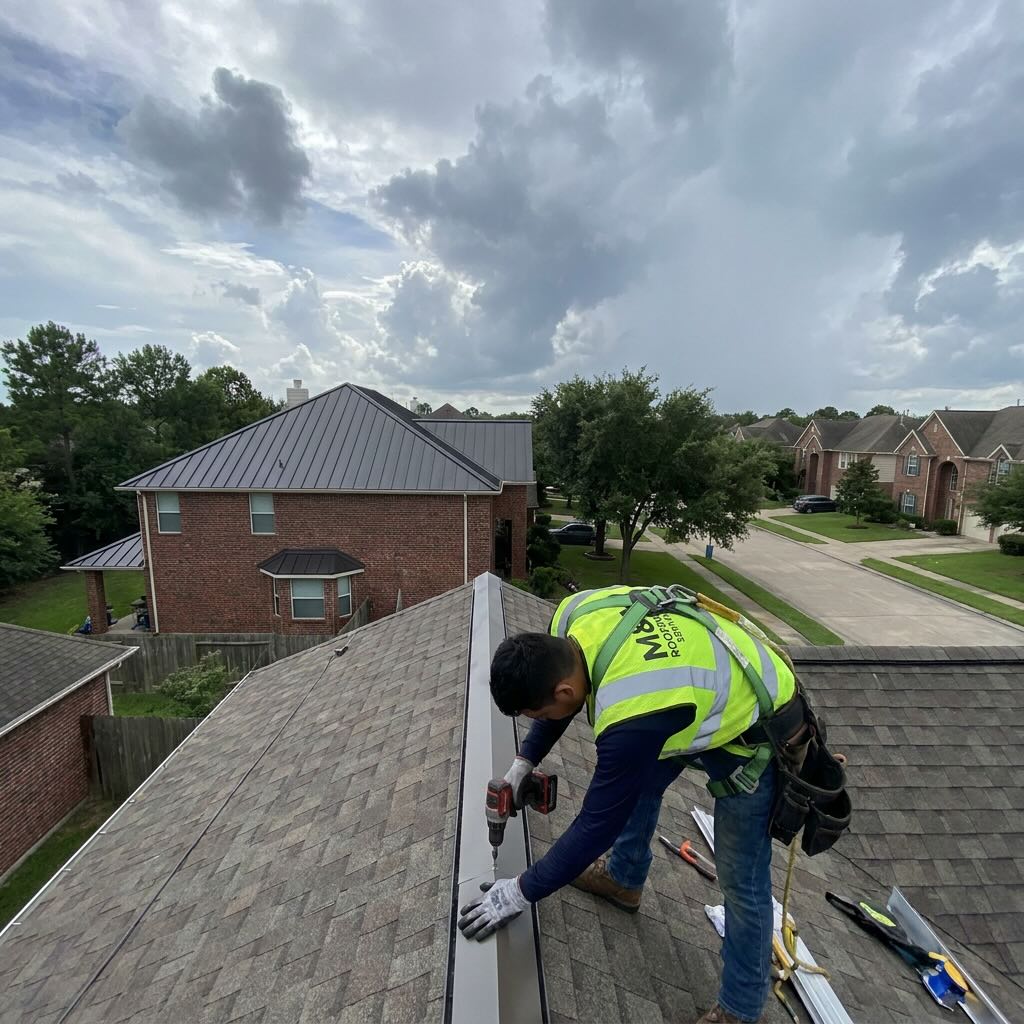
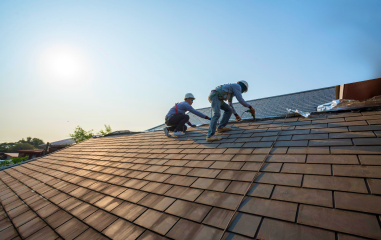
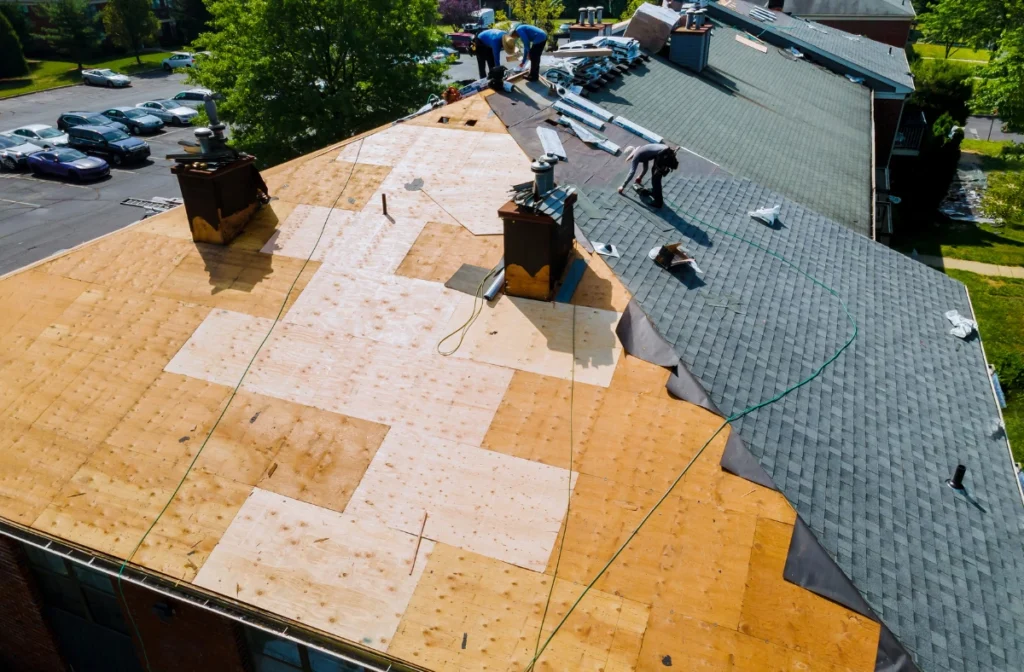
- A Full, On-Roof Inspection: A quick look from the ground or a drone flyover is not sufficient. The inspector must physically get on the roof and examine all surfaces, flashing, ridge caps, valleys, gutters, and any other components that could have sustained damage.
- Systematic, Time-Stamped Photo Documentation: This isn’t just one or two photos. It’s a comprehensive visual record of every single hail bruise, cracked shingle, dented flashing, and lifted edge. The photos should be high-resolution, clearly dated, and tied to specific sections of the roof.
- A Detailed Written Damage Assessment: This report should clearly outline the scope of the damage found and the proposed repair plan. This is not a contract for you to sign; it is documentation for your records and for the insurance company.
- An Honest, Data-Driven Recommendation: If the total cost of the damage is below your deductible, a reputable contractor will advise you not to file a claim. Filing a claim for sub-deductible damage only serves to put a mark on your policy record without providing you with any financial benefit.
- Guaranteed Availability to Meet the Adjuster: This is where the relationship with your contractor becomes invaluable. Your contractor should be willing and able to walk the roof with the adjuster, point out the documented damage, and answer any technical questions directly. This collaborative conversation often changes the outcome of the claim.
At M&M Roofing, Siding & Windows, the project manager who performs your initial, detailed assessment is the same person who will manage your project from start to finish. There are no handoffs and no information lost in translation between departments. The person who found the damage is the same person who ensures it gets fixed correctly.
Frequently Asked Questions
Does calling a roofer before my insurance company negatively affect my claim?
No. Getting an independent, third-party inspection before filing a claim is a standard, legally appropriate, and highly recommended practice. It does not delay your claim and does not give your insurer any grounds to reduce your payout. It provides you with documented, credible evidence before the official claim process begins, which typically improves your outcome.
How long do I have to file a roof insurance claim in Texas?
Your insurance policy contract, not state law, determines the notification deadline. Many Texas policies require you to notify your insurer of a loss within 90 to 180 days of the storm event [4]. Some policies may allow up to one year. It is crucial to check your specific policy documents. The state’s two-year statute of limitations only applies to the timeframe you have to file a lawsuit against your insurer; it does not replace your policy’s initial notice requirements.
Can my roofing contractor negotiate with my insurance company on my behalf?
No. Texas law prohibits roofing contractors from acting as public insurance adjusters on claims where they are also performing the repair work [3]. Your contractor can and should document damage, attend the adjuster visit, and explain their findings. However, the final negotiation with the insurer is your responsibility as the policyholder. If you require professional claims advocacy, a licensed public adjuster is the appropriate resource.
Will filing a single roof claim raise my insurance premiums?
A single storm damage claim is unlikely to cause a direct increase in your individual premiums, as hail and wind damage are typically considered “acts of nature” rather than homeowner negligence [1]. However, filing multiple claims within a short period can affect your rates. The bigger risk is filing a claim for damage that falls below your deductible. In that case, you may still have a claim on your record without receiving any payment. This is a primary reason why getting a professional inspection before filing is so important.
What is the difference between ACV and RCV coverage for my roof?
Actual Cash Value (ACV) coverage pays the depreciated value of your roof at the time of the claim. Replacement Cost Value (RCV) coverage pays the full cost to replace your roof at current prices. On a ten-year-old asphalt shingle roof, the depreciation can reduce your payout by thousands of dollars [3]. Many Texas insurance policies have shifted toward ACV coverage for roofs in recent years. It is vital to review your current policy before storm season begins.
What should I do if the insurance adjuster and my roofer disagree on the scope of the damage?
This is precisely why having your contractor present during the adjuster’s inspection is so effective. It allows disagreements to be resolved in real-time. If the adjuster’s final assessment still comes in significantly lower than your contractor’s estimate, you have several options. You can submit your contractor’s additional documentation for a re-review, request a second inspection from a different adjuster, or engage a licensed public adjuster to advocate on your behalf. Do not accept a settlement that does not cover the full scope of documented damage without first understanding all of your options.
How can I know if a “storm chaser” is at my door?
There are several reliable indicators of a storm-chasing contractor. They often show up within 24 to 48 hours of a major storm; they will pressure you to sign a contract before completing a full inspection; they may offer to waive your deductible (which is illegal); or they will have no verifiable physical address or local presence. Established, local contractors typically have more than enough work after a major storm event without needing to solicit door-to-door. We have been a part of the Texas community for over 40 years.
How does M&M Roofing help with the insurance process?
We provide thorough, no-obligation pre-claim inspections, complete with time-stamped photo documentation and detailed written damage assessments that you can submit with your insurance notification. We make ourselves available to attend adjuster visits to answer technical questions and ensure all damage is seen. We do not negotiate claims or act as public adjusters; that is your role as the homeowner. Our function is to ensure the documentation is complete and accurate. We have been navigating the complexities of insurance claims alongside Texas homeowners for over four decades. Schedule a free inspection, and we will give you an honest, detailed assessment of what we find.

The Real Question: How to Ensure Your Claim is Handled Fairly
When homeowners ask whether to call their insurance company or a roofer first, the real question they’re asking is this: how do we make sure our claim gets handled fairly, and how do we avoid making a mistake we can’t undo?
Both of those concerns are completely legitimate.
The answer to both is documentation.
A roofing contractor who performs a thorough, independent inspection before your adjuster arrives provides you with a record of the damage, independent of what the adjuster finds. That’s not adversarial. It’s protection. In our experience, good adjusters welcome the collaboration; it makes their job easier and the claim more accurate. When your contractor and the adjuster are on the roof together, damage that might otherwise be dismissed gets discussed on the spot.
Here’s what this looks like in practice. A homeowner in Pearland calls her insurance company the morning after a hailstorm. The adjuster arrives three days later, walks the property, and submits an assessment. She accepts it, hires the first contractor who calls her, and work begins. Midway through the job, her contractor finds hail-bruised decking underneath the shingles—damage the adjuster didn’t note because it required removing the shingles to see. Now she’s in a dispute. Her insurer says the decking wasn’t in the original claim. Her contractor says it’s clearly storm-related. She’s stuck in the middle.
This is a common scenario. It’s not fraud, and it’s not bad faith on the insurer’s part. It’s a documentation gap that could have been prevented by having a contractor’s detailed report on file before the adjuster’s visit.
At M&M Roofing, Siding & Windows, we have handled thousands of insurance claims for homeowners in Houston, Austin, San Antonio, Beaumont, and Lake Charles. We know what storm damage looks like, we know what adjusters are required to document, and we know what gets missed when the documentation isn’t complete from the start.
If a storm has impacted your home, take a look at our comprehensive storm damage roof repair guide for a full walkthrough of the process. Then, schedule a free, no-obligation inspection with our team before you file anything. We will provide you with an honest, detailed assessment of what we find and exactly what it means for your potential claim. No upsell. No pressure.
And if you want to understand the entire insurance process from start to finish, our in-depth roof insurance claims guide covers every step from the first notice through the final payment.
References
[1] Omar Ochoa Law — Texas Led Nation in 2024 Hail Damage Claims: https://www.omarochoalaw.com/blog/how-much-does-insurance-pay-for-hail-damage
[2] Houston Chronicle / Vargas Gonzalez LLP — 47% of Texas Home Insurance Claims Closed Without Payment in 2024: https://vargasgonzalez.com/blog/what-insurance-does-and-doesn-t-cover-for-roof-damage/
[3] Texas Department of Insurance — Insurance and Your Roof: https://www.tdi.texas.gov/tips/replacing-your-roof.html
[4] Brelly — Texas Guide to Property Insurance Claims, Deadlines and Laws: https://brelly.com/claim-resources/texas-guide-insurance-claim-laws-deadlines-faqs/
M&M Roofing, Siding & Windows has served homeowners across Texas and Louisiana for more than 40 years. Backed by over 100,000 completed home improvement projects, M&M offers expert insight on roofing, siding, windows, gutters, storm damage, and exterior restoration, helping homeowners make confident, informed decisions about their property.