
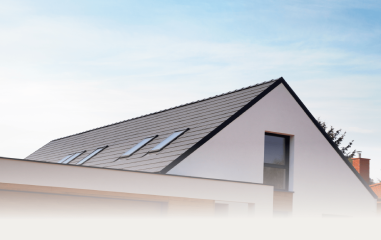





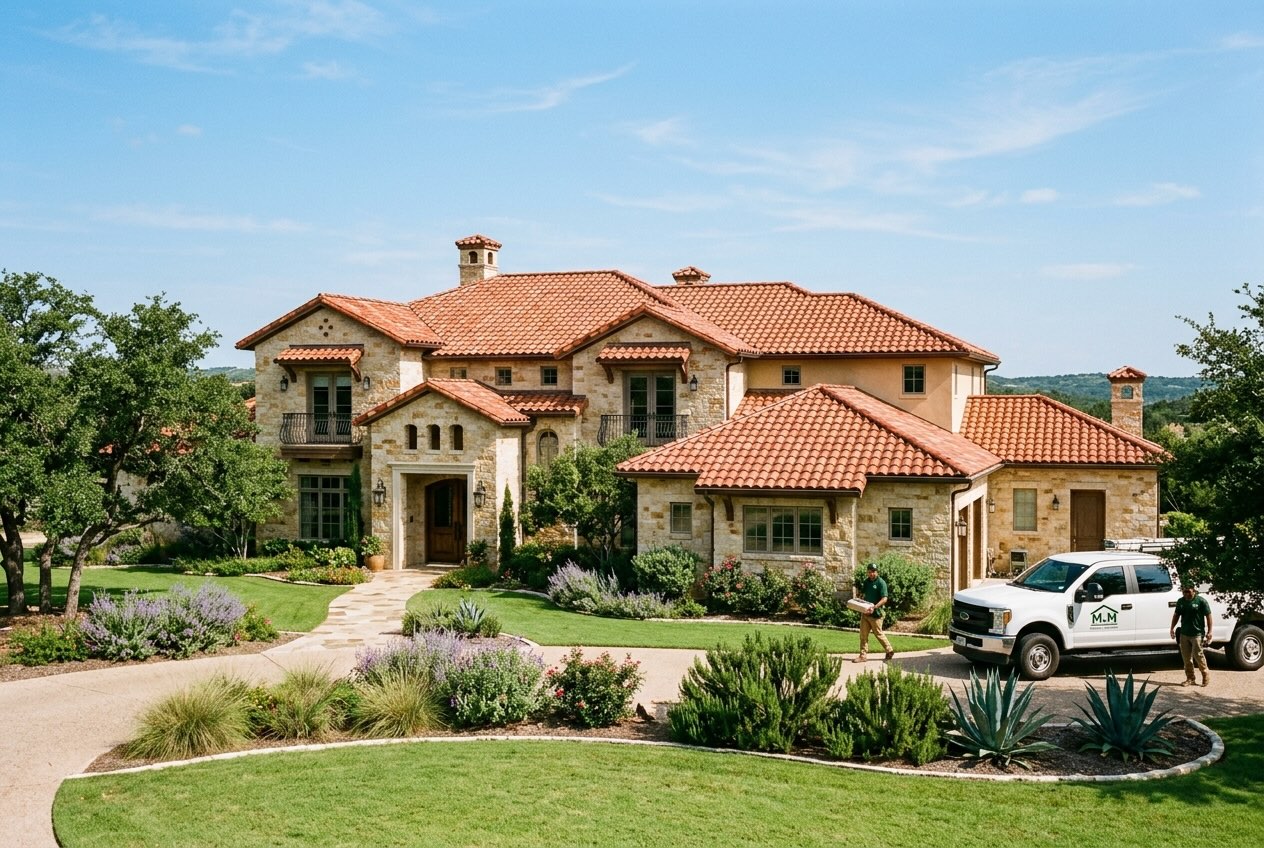
Tile roofing uses individual clay or concrete tiles to create a durable, fire-resistant roof that can last 50 to 100 years. Clay tiles are heavier and more expensive but offer greater longevity and a distinctive aesthetic suited to Mediterranean and Spanish Colonial styles common across Texas. Concrete tiles are lighter, less expensive, and available in more styles, making them the most widely installed tile roofing option in the southern United States.
Tile roofs define the look of Texas’s most desirable neighborhoods. From the Hill Country estates around San Antonio to the Mediterranean Revival homes lining Austin’s Westlake Hills, tile is everywhere you want to live.
But beauty is only one reason to consider it.
The real story is longevity. A properly installed tile roof outlasts two or three asphalt shingle roofs on the same house.
The catch: tile roofing costs significantly more upfront. It requires specific structural support. And it demands an installer who actually knows how to work with it. That’s a rarer skill set than most homeowners realize.
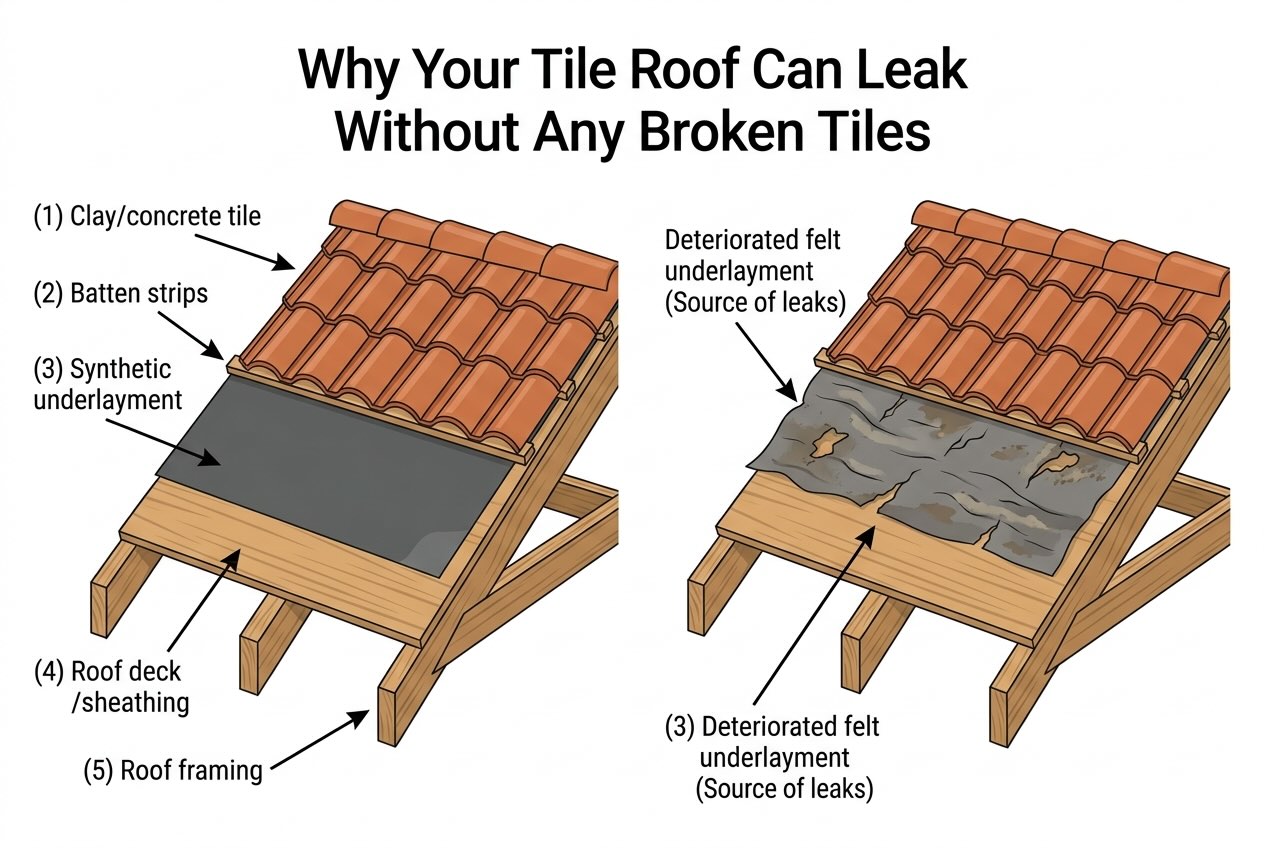
Here’s what no one tells you about tile. The tiles themselves almost never fail. What fails is the underlayment underneath them. On a 25-year-old clay tile roof that still looks perfect from the street, the felt underlayment may have been failing for five years already. By the time water appears on a ceiling, the damage is done.
This guide covers everything a Texas homeowner needs to make a sound decision: clay vs. concrete, real cost ranges, how Texas’s climate affects tile, lifespan, maintenance, and what to look for in a contractor who actually knows how to install it.
M&M Roofing has been installing and maintaining tile roofs across Texas since 1983. Four decades of that work. The installation techniques, repair standards, and underlayment protocols covered in this guide come directly from that experience.
Clay vs. Concrete Tile Roofing: What’s the Difference?
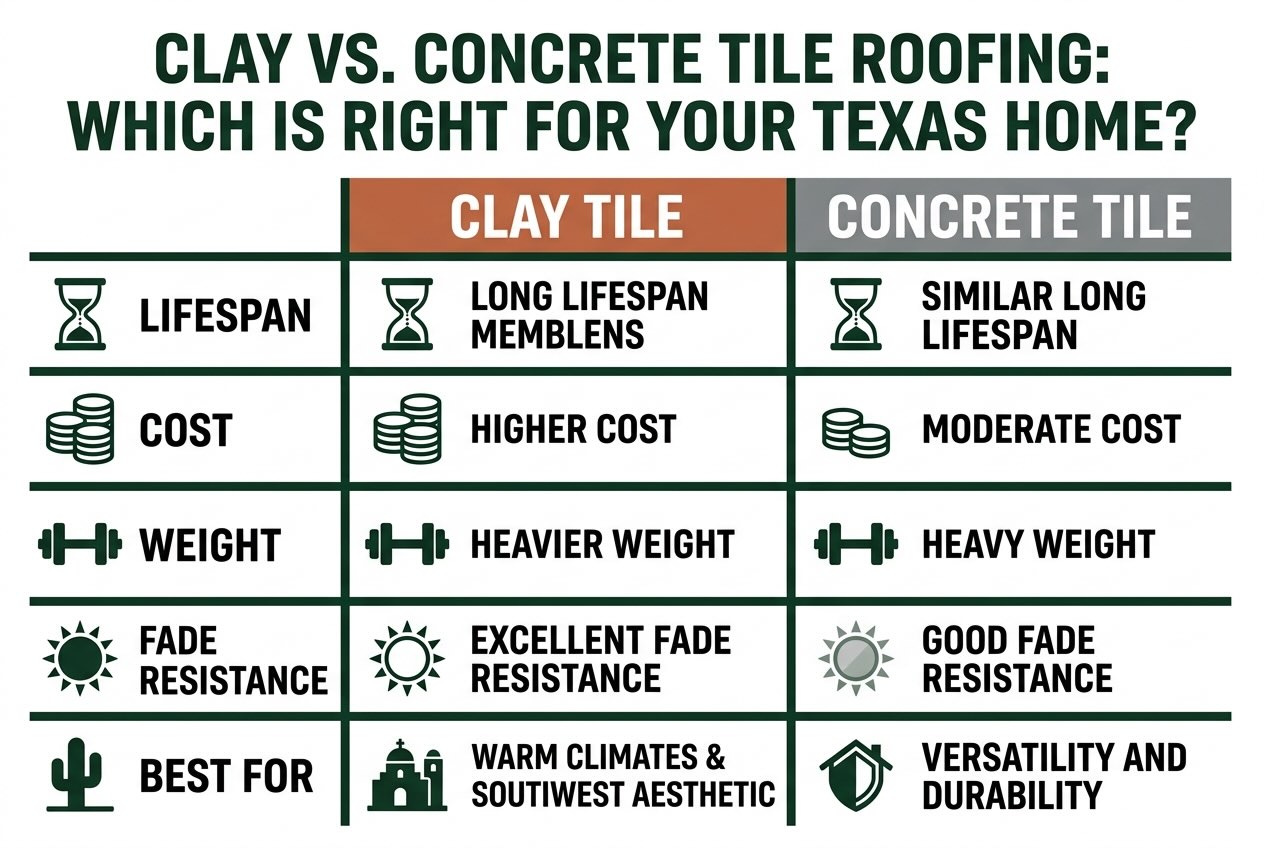
The honest answer is that most homeowners can’t tell the difference by looking. Both materials produce similar profiles. Both install the same way. And both outperform asphalt shingles by a wide margin in Texas’s climate.
But the differences matter for long-term performance, especially under Texas UV.
| Factor | Clay Tile | Concrete Tile |
|---|---|---|
| Material | Fired natural clay | Portland cement + sand + aggregate |
| Weight | 900–1,200 lbs per square (100 sq ft) | 800–1,100 lbs per square |
| Lifespan | 50–100+ years | 30–50 years |
| Cost (installed) | $15–$30 per sq ft | $10–$20 per sq ft |
| Fade resistance | Excellent — color fired into tile | Moderate — surface coating fades over time |
| Styles | Barrel (S-tile), flat, mission | Barrel, flat, low-profile, shake-look |
| Maintenance | Very low | Low (resealing/recoating every 10–15 yrs) |
| Best for | Hot, dry climates; premium aesthetics | Budget-conscious tile; more style variety |
Choose clay if: aesthetics are a priority, your roof structure can support the weight, you want maximum lifespan, and budget isn’t the primary constraint. Clay’s fired-in color never fades. That’s a meaningful benefit under Texas UV. Concrete tile surface coatings will degrade noticeably within 15 to 20 years without recoating.
Choose concrete if: you want tile aesthetics at lower cost, your roof framing may not support maximum clay tile weight, or you want a wider range of style profiles. Concrete tile now mimics wood shake, slate, and flat tile convincingly. It’s a strong material. The longevity gap just needs to be factored into long-term planning.
The weight question. Both clay and concrete tile are significantly heavier than asphalt shingles (roughly 250 lbs per square). Before installing tile on any existing Texas home (especially construction from the 1970s through the 1990s built for asphalt), a structural assessment of the roof framing is required. This is non-negotiable. Skipping it is how tile roofs cause structural damage.
Tile Roof Styles: S-Tile, Barrel, Flat, and More
Walk through San Antonio’s King William Historic District or drive through Westlake Hills in Austin, and you’ll see all four major tile profiles in use. Each has a distinct look tied to specific architectural contexts.
Barrel Tile (S-Tile / Spanish Tile)
The classic rounded profile, named for its resemblance to a half-cylinder. Barrel tile is the most common tile profile in Texas, dominant on Spanish Colonial, Mediterranean, and Mission Revival homes throughout the Hill Country, South Texas, and San Antonio’s historic neighborhoods. The curved shape creates natural air pockets between tile and deck that improve ventilation and reduce heat transfer into the attic. Available in both clay and concrete.
Flat Tile (Low-Profile Tile)
A smooth, flat profile that reads as more contemporary than barrel tile. Flat tile is gaining ground in modern Texas custom construction, particularly in Austin’s Westlake Hills and The Woodlands. It’s lighter than barrel tile, which gives it more structural flexibility. Primarily available in concrete, clay flat profiles exist but are less common in the Texas market.
Mission Tile (Two-Piece Barrel)
The traditional two-piece system: a flat pan tile underneath and a rounded cover tile on top. This produces the most authentic Spanish and Mediterranean look available. It’s also the most complex to install and the most expensive. Common in historic renovations and high-end custom builds where architectural authenticity matters more than installation cost.
Interlocking / Shake-Look Tile
Concrete tile engineered to mimic wood shake or slate. Popular in neighborhoods where HOA requirements call for a traditional aesthetic but homeowners want tile durability. Generally, the most affordable tile profile option, and one of the more versatile for neighborhoods with restrictive design guidelines.
How Much Does a Tile Roof Cost in Texas?
No competitor in this market publishes actual Texas cost data. Here it is.
| Home Roof Size | Concrete Tile (Installed) | Clay Tile (Installed) | Architectural Shingles (comparison) |
|---|---|---|---|
| 1,500 sq ft | $15,000–$30,000 | $22,500–$45,000 | $9,000–$15,000 |
| 2,000 sq ft | $20,000–$40,000 | $30,000–$60,000 | $12,000–$20,000 |
| 2,500 sq ft | $25,000–$50,000 | $37,500–$75,000 | $15,000–$25,000 |
Prices reflect current Texas labor and material rates (2026). “Roof size” refers to total roof surface area, not home square footage. Costs vary by market (Austin and Houston labor runs 15–25% higher than San Antonio and smaller markets), roof pitch, penetration count, and whether structural reinforcement is needed.
Not sure what your specific roof will cost? M&M Roofing provides free, itemized estimates with no pressure. Schedule Your Free Consultation →
For a broader Texas cost reference, see how much does it cost to replace a roof in Texas?
What Drives Tile Roof Cost in Texas
Material type. Clay costs 30 to 50 percent more than concrete but lasts significantly longer. On a home where the owners plan to stay for 30-plus years, the 50-year cost of ownership often favors clay once you account for one fewer re-roofing cycle.
Structural assessment and reinforcement. If the roof framing isn’t rated for tile weight, upgrades typically add $2,000 to $8,000 or more. Many Texas homes built for asphalt shingles will require this work.
Underlayment selection. High-quality synthetic underlayment at $0.50 to $1.50 per sq ft is critical under tile. Felt underlayment installed under tile roofs in the 1990s and 2000s has a 20 to 30 year lifespan. The underlayment cost at installation is small. The cost of skimping on it shows up decades later.
Roof pitch and complexity. Steeper pitches require more labor time and safety equipment. Complex hip and valley configurations on larger Hill Country and Woodlands homes add cost.
Full tear-off. Removing old asphalt or tile adds $1 to $3 per sq ft. Texas building codes generally require full tear-off when re-roofing over an existing layer.
Post-storm timing. Material and labor demand spikes across Texas after major hail events. Booking early after a storm locks in better pricing before the post-event backlog builds.
Will insurance cover tile roof damage? Tile roofs are vulnerable to large hail impacts. The Texas Department of Insurance [1] confirms that Class 4 impact-resistant roofing products qualify for insurance premium credits from Texas carriers. Many tile products carry high impact ratings. After a significant hail event, M&M documents tile roof damage for insurance carriers and works directly with adjusters. See how to get insurance to pay for roof replacement.
How Long Does a Tile Roof Last?
This is the most-searched question in the tile roofing category. The answer is better than most homeowners expect, with one important caveat.
| Tile Material | Tile Lifespan | Underlayment (Felt) | Underlayment (Synthetic) | What Fails First |
|---|---|---|---|---|
| Clay tile | 50–100+ years | 20–30 years | 40–50 years | Underlayment |
| Concrete tile | 30–50 years | 20–30 years | 40–50 years | Depends on age |
| Slate tile | 75–150+ years | 20–30 years | 40–50 years | Underlayment |
The Tile Roofing Industry Alliance [2] confirms that concrete and clay tiles are designed to resist hailstones larger than a golf ball when tested to the FM 4473 standard. Properly installed tile roofs can withstand winds up to 200 mph. The tiles themselves are remarkably durable.
The problem is almost never the tile.
The underlayment issue most tile roof owners don’t know about. The tiles on your roof may look perfect. But if your tile roof is 20 to 30 years old and still has the original felt underlayment, that underlayment has likely failed or is nearing failure, even if there’s no leak yet. When underlayment fails, water infiltrates under the tiles and into the roof deck without moving a single tile. It’s invisible until a ceiling stain appears inside the home.
The solution is underlayment replacement without replacing tiles. On a clay tile roof in good condition, a qualified contractor can carefully remove the tiles, install new synthetic underlayment, and reset the original tiles. The cost is significantly less than full roof replacement. The result extends the roof’s useful life by 20 to 40 years.
If your tile roof is 20-plus years old and you don’t know when the underlayment was last replaced, that’s the first question to answer. Schedule a Free Underlayment Inspection → before a slow leak becomes structural damage.
For broader lifespan context across roofing materials, see how long does a roof last.
Tile Roofing and Texas Weather: What You Need to Know
Texas’s climate is harder on roofing materials than most homeowners realize. For tile roofs, three weather factors determine long-term performance.
| Climate Factor | Texas Reality | Tile Roofing Impact |
|---|---|---|
| UV and Heat | 200–240+ sunny days/yr; summer highs 95–110°F | Clay tile excels — fired color never fades; concrete tile surface coatings degrade faster under TX UV |
| Hail | TX hail corridor covers much of the state; golf-ball hail common [3] | Large hail (1.5″+) can crack individual tiles; sub-surface underlayment damage may be invisible without inspection |
| Wind | Severe thunderstorm events; Gulf Coast hurricane exposure | Tile roofs are wind-resistant when properly installed; ridge cap and hip tiles require proper mortar/adhesive to resist uplift |
| Gulf Coast Humidity | High humidity in Houston and Beaumont markets | Moss and algae growth possible on north-facing tile surfaces; treatment and low-pressure washing needed every 5–10 years |
Heat: Tile’s Biggest Advantage in Texas
Tile roofs are naturally ventilated. The curved profile of barrel tile creates air channels between tile and deck that allow heat to dissipate rather than transferring directly into the attic. Research cited by the NRCA [4] and the Tile Roofing Industry Alliance indicates tile roofs can reduce attic temperatures by 10 to 15°F compared to asphalt shingles under the same conditions. In a Texas summer where attic temps without proper ventilation can exceed 150°F, that difference affects both shingle lifespan and cooling costs.
Clay tile has another heat-specific advantage: its fired color is permanent. Texas UV won’t fade it. Concrete tile surface coatings will degrade. That’s not a disqualifying flaw in concrete tile, but it does mean recoating or resealing every 10 to 15 years is part of the maintenance cycle.
For more on heat management under the roof, see energy-efficient roofing systems.
Hail: Tile’s Biggest Vulnerability
Texas sits in one of the country’s most active hail corridors. The NOAA National Severe Storms Laboratory [3] documents the significant concentration of large hail events across the state annually.
Individual clay or concrete tiles can crack under large hail impacts. The good news: individual cracked tiles can be replaced without disturbing the entire roof. One tile. No full replacement. This is a genuine maintenance advantage over asphalt shingles, where large hail events often require complete re-roofing.
The concern is sub-surface underlayment damage. Large hail can damage the underlayment beneath intact-looking tiles. That damage is invisible without a professional inspection. After any significant hail event, a tile roof inspection is essential, not just to assess visible cracks but to evaluate underlayment integrity.
Hail in your area recently? Request a Free Tile Roof Inspection → M&M documents damage for insurance carriers.
For more on hail damage patterns, see hail damage to your roof.
Tile Roof Maintenance: What Owners Need to Do (and Not Do)
Tile roofs are genuinely low maintenance compared to asphalt. But low maintenance doesn’t mean no maintenance. Four tasks matter.
1. Post-storm inspection. After any hail event or high-wind storm, have a professional inspect ridge caps, hip tiles, and south- and west-facing slopes for cracked or displaced tiles. Individual cracked tiles can be replaced for a fraction of full repair cost. Delays let water reach the deck.
2. Gutter and drain clearing. Tile roofs shed debris over time: broken mortar, moss fragments, and granules from weathered concrete coatings. Clogged gutters cause water backup under eave tiles, which accelerates underlayment degradation at exactly the point where drainage pressure is highest.
3. Moss and algae treatment. In humid Houston, Beaumont, and Gulf Coast markets, north-facing tile surfaces develop moss and algae over five to ten years. Low-pressure washing combined with zinc strip installation prevents regrowth without damaging tiles. Never high-pressure wash tile. The force cracks tiles and dislodges mortar at ridge caps and hip junctions.
4. Underlayment age check. If your tile roof is 20 or more years old and you don’t know when the underlayment was last replaced, schedule a professional inspection now. This is the most commonly overlooked tile roof maintenance task. The tiles look fine. They usually are fine. The underlayment beneath them may not be.
How to walk on a tile roof without breaking tiles. Never step directly on tile. Walk on the lowest third of each tile, where tile-to-batten contact provides structural support. Use a foam kneeler pad and distribute weight across multiple tiles at once. Better option: hire a contractor trained in tile roof work. One cracked tile from improper walking costs more to replace than a professional inspection fee. Not all contractors who say they work on tile roofs have that specific training.
Need a tile-trained contractor? Contact M&M Roofing.
Is Tile Roofing Right for Your Texas Home?
Here’s an honest framework. Tile isn’t the right choice for every situation.
Tile roofing is worth the investment if:
Your home can support the structural load. Older Texas construction from the 1970s through 1990s often needs a structural assessment before installing tile, but many can be reinforced at a reasonable cost.
You plan to stay in the home long-term. Clay tile’s 50 to 100-year lifespan and concrete tile’s 30 to 50-year lifespan amortize the higher upfront cost over decades. The math works in your favor when you’re not planning to hand the roof over to the next buyer in five years.
Your home’s style suits tile. Mediterranean, Spanish Colonial, Tuscan, Hill Country, and contemporary custom construction with flat tile all look right with tile roofing. The aesthetic fit matters. Tile on a Cape Cod looks wrong.
Fire resistance is a priority. Tile carries a Class A fire rating, the highest available. In wildfire-adjacent Texas Hill Country communities, that rating matters for both safety and insurance.
Tile roofing may not make sense if:
Your home’s framing isn’t rated for the additional weight, and you’re not prepared to invest in structural reinforcement.
You’re planning to sell within five years. Tile adds real value, but the return timeline is longer than a short-selling horizon.
Your budget requires the lowest possible upfront cost. Architectural asphalt shingles remain the most cost-effective option at installation, even though tile wins on total cost of ownership over decades.
M&M Roofing’s tile capabilities. M&M installs, repairs, and re-underlays tile roofs across Austin, San Antonio, Houston, and Beaumont. M&M’s crews are trained specifically for tile installation. Not every roofing contractor has that training. Tile installation requires different techniques, different fastening patterns, and different underlayment specifications than shingle work. Hiring a contractor without tile-specific training is how you end up with a cracked tile count that grows every year and a warranty that covers nothing.
Considering a tile roof for your Texas home? Get Your Free Tile Roof Consultation →
Frequently Asked Questions
How long does a tile roof last in Texas?
Clay tile roofs typically last 50 to 100-plus years in Texas’s climate. Concrete tile roofs last 30 to 50 years. The underlayment beneath the tiles, which provides the actual waterproofing layer, lasts 20 to 30 years with felt or 40 to 50 years with synthetic. On tile roofs more than 20 years old, underlayment inspection and potential replacement is the most important maintenance priority, regardless of how the tiles look.
How much does a tile roof cost in Texas?
Concrete tile roofing costs $10 to $20 per sq ft installed in Texas, or $15,000 to $40,000 for a typical 1,500 to 2,000 sq ft roof. Clay tile runs $15 to $30 per sq ft installed, or $22,500 to $60,000 for the same roof size. Costs vary by market (Austin and Houston run 15 to 25 percent higher than San Antonio), roof pitch, structural requirements, and material selection.
Is tile roofing good for hot Texas weather?
Yes. Tile is one of the better roofing materials for Texas’s heat. Clay tile’s fired surface reflects and re-emits solar heat more effectively than asphalt. The natural air gap created by barrel tile profiles reduces heat transfer into the attic. Tile roofs can lower attic temperatures by 10 to 15°F compared to asphalt shingles under Texas summer conditions, which reduces cooling loads and shingle degradation from below.
Can tile roofs withstand Texas hail?
Tile can sustain damage from large hail of 1.5 inches or larger, including cracked individual tiles and sub-surface underlayment damage that may not be immediately visible. The key advantage: individual cracked tiles can be replaced without disturbing the entire roof. After significant hail events, a professional tile roof inspection is necessary, not just to check visible tiles but to assess underlayment integrity beneath intact-looking tiles.
What’s the difference between clay and concrete roof tiles?
Clay tiles are made from fired natural clay, last 50 to 100-plus years, and have color fired into the tile so they don’t fade under UV. Concrete tiles are made from Portland cement, last 30 to 50 years, offer a wider range of styles, and cost 30 to 50 percent less than clay. For Texas’s intense UV and heat, clay’s colorfast properties are a meaningful long-term advantage. Concrete tiles require recoating or resealing every 10 to 15 years.
How do I know if my tile roof needs underlayment replacement?
If your tile roof is 20 or more years old and you don’t know when the underlayment was last replaced, schedule a professional inspection. Signs of underlayment failure include ceiling stains, mold in the attic, or soft decking without any visibly damaged tiles. On clay tile roofs in good condition, a qualified contractor can remove the tiles, install new underlayment, and reset the originals, extending the roof’s life by 20 to 40 years at significantly less cost than full replacement.
What tile roof styles are most common in Texas?
Barrel tile (also called S-tile or Spanish tile) is the most common profile in Texas, dominant in San Antonio, the Hill Country, and Austin’s Mediterranean-style neighborhoods. Flat tile is growing in contemporary custom construction in Westlake Hills and The Woodlands. Mission tile (two-piece barrel) is used in high-end historic renovations. Interlocking shake-look concrete tile is common in HOA communities where traditional aesthetics are required.
Does tile roofing increase home value in Texas?
Tile roofing adds measurable value in Texas markets where the style is common: San Antonio, Austin’s affluent western suburbs, Houston’s premium neighborhoods like The Woodlands and River Oaks, and Hill Country communities. In markets where tile is rare, the premium may not transfer directly to resale value, though buyers will recognize the lower long-term maintenance cost. A real estate professional familiar with your specific submarket is the right source for resale value guidance.
Make the Right Call on Your Texas Roof
Tile roofing is among the longest-lasting, most beautiful, and most thermally efficient roofing options available to Texas homeowners. Clay tile lasts 50 to 100-plus years. Concrete tile lasts 30 to 50 years. Both outperform asphalt shingles significantly in Texas’s heat, UV, and hail conditions.
The key decision points: clay vs. concrete based on budget and lifespan priorities, structural capacity of your existing roof framing, and for any tile roof more than 20 years old, a serious underlayment age check before a hidden failure becomes expensive.
M&M Roofing has installed and maintained tile roofs across Texas since 1983. Four decades of Texas hail seasons, underlayment replacements, and tile work that’s still standing on roofs across Austin, San Antonio, Houston, and Beaumont today. M&M’s crews are trained specifically for tile because not all roofing contractors are.
Schedule Your Free Tile Roof Consultation → No pressure, no obligation. Same-day availability before noon.
References
[1] Texas Department of Insurance — Impact-Resistant Roofing Credits
[2] Tile Roofing Industry Alliance — Durability & Longevity
[3] NOAA National Severe Storms Laboratory — Hail Research
[4] National Roofing Contractors Association — Roofing Guidelines