
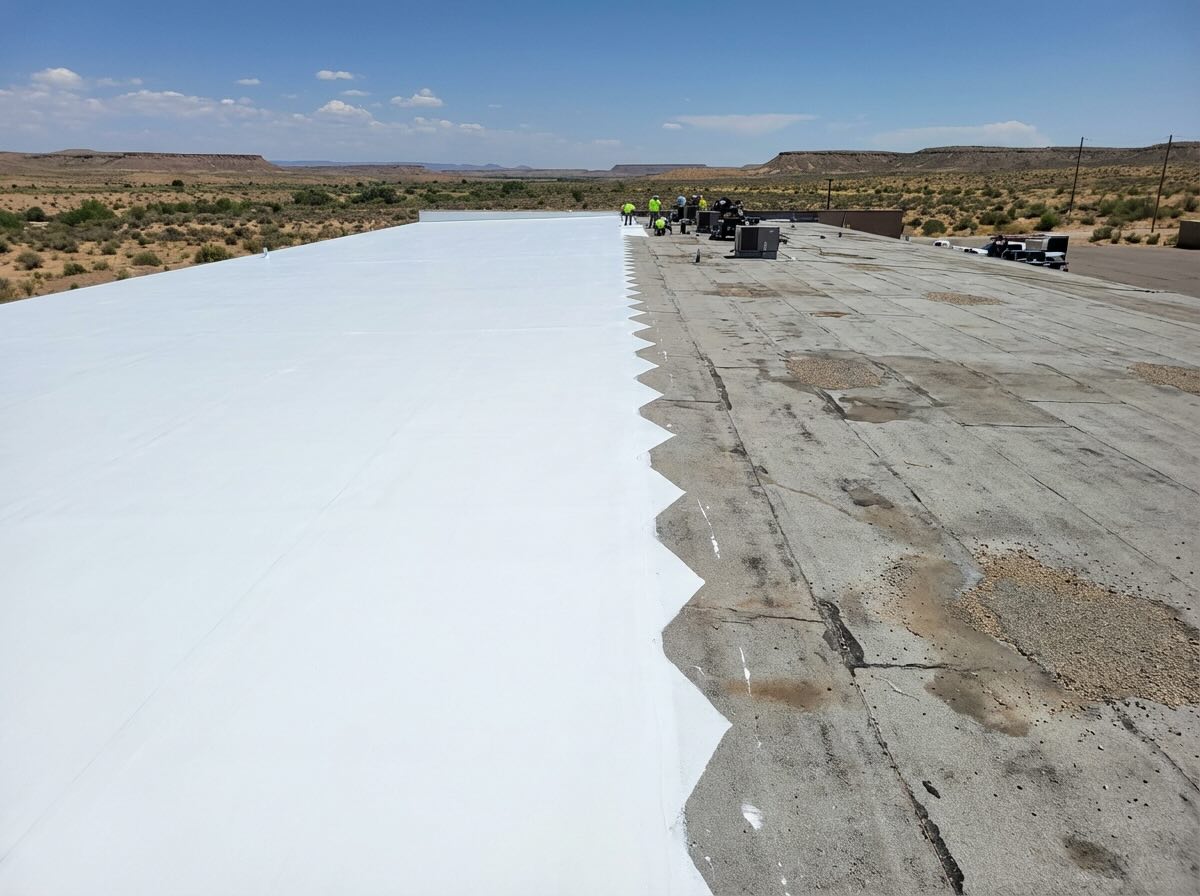
A commercial roof coating is a liquid membrane applied directly over an existing roof to seal leaks, reflect heat, and extend roof life by 10–20 years without tearing off the existing system. It costs 40–60% less than full replacement and can typically be installed in 1–2 days. The right candidate is a structurally sound roof that leaks or is showing age, not one with widespread structural failure.
The call comes every week. A property manager or building owner gets a $60,000 roof replacement quote, blinks at the number, and wonders if there’s another way. Most of the time, there is.
Contractors don’t always lead with it. A large percentage of aging commercial roofs in Texas and Louisiana don’t need replacement. They need a coating. The difference in cost is staggering. The difference in disruption to the building and business inside is even bigger.
This guide covers what commercial roof coatings are, which types work for which roofs, what the job costs in Texas and Louisiana, and how to tell whether a roof qualifies. By the end, a building owner has enough to make a confident decision and ask the right questions.
What Is a Commercial Roof Coating — and How Does It Work?
Think of a commercial roof coating as a protective skin that breathes with the roof.
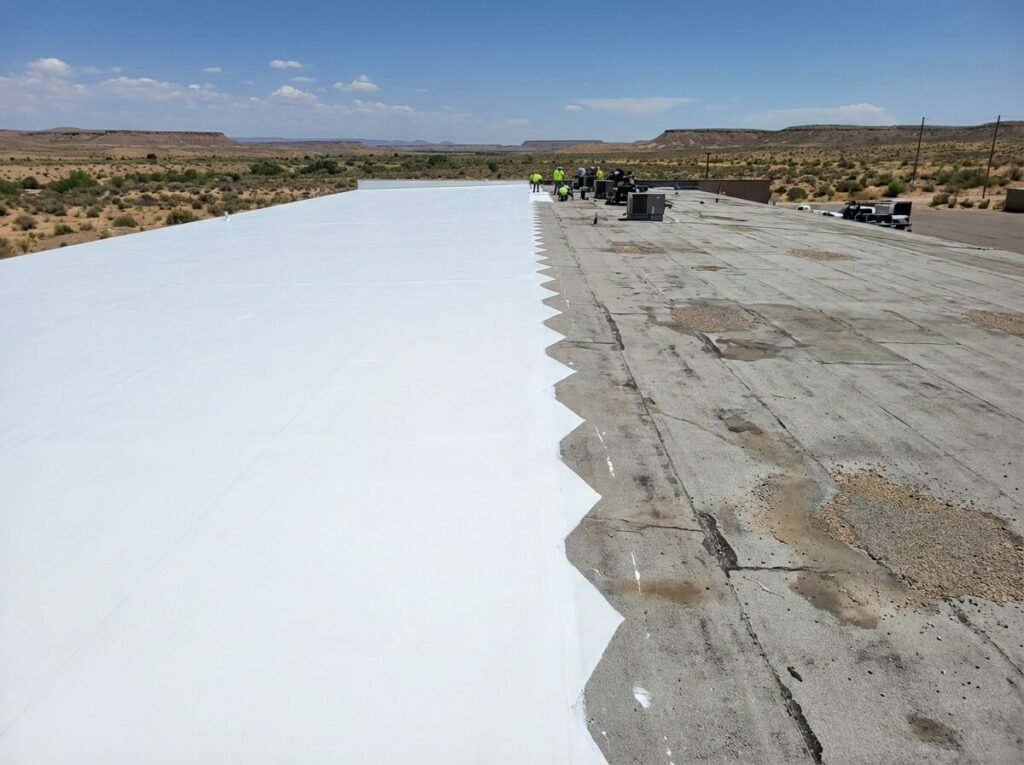
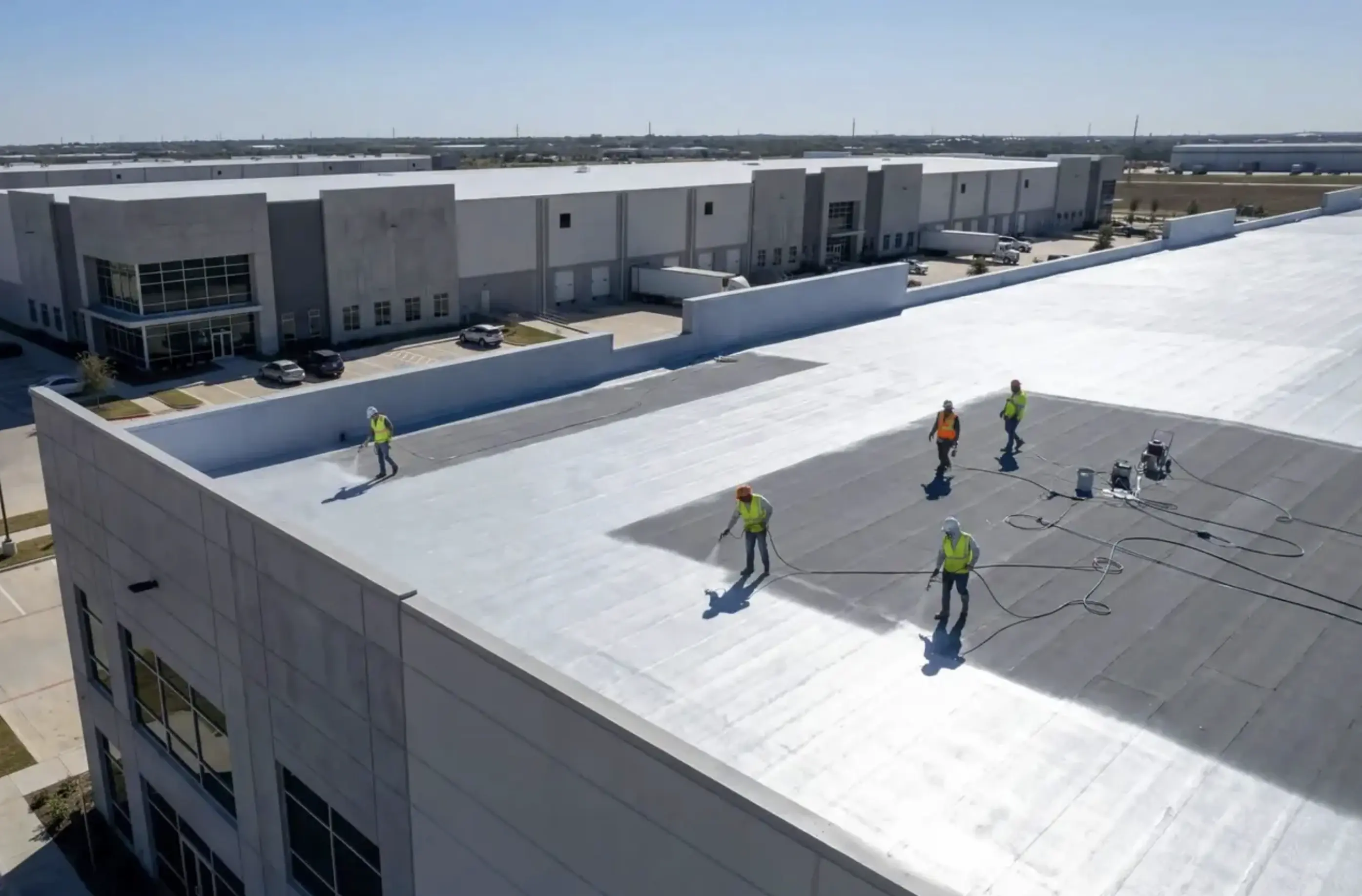
It starts as a liquid. A contractor applies it over the existing roof surface, where it cures into a seamless, flexible membrane bonded directly to the substrate beneath. No tear-off. No landfill debris. No weeks of construction noise disrupting tenants or business below.
The coating does three jobs at once. It waterproofs the surface by filling seams, fastener heads, and small cracks. It reflects UV radiation that would otherwise bake and degrade the membrane year after year. It adds flexibility to surfaces that have grown brittle with age, allowing the roof to expand and contract through temperature cycles without cracking.
Application follows a sequence. The crew pressure-washes the roof to remove dirt, mold, and loose material. A primer coat goes down first if needed to improve adhesion. Then the coating is applied in one or two layers, typically reaching 20 to 40 mils of dry film thickness. The result is a continuous, joint-free membrane across the entire roof surface.
The whole process on a standard commercial building takes one to two days.
The 4 Types of Commercial Roof Coatings (And When to Use Each)
Not all coatings are the same. Each chemistry has specific strengths, and the right choice depends on roof type, climate, and the building’s performance demands.
Acrylic Roof Coatings
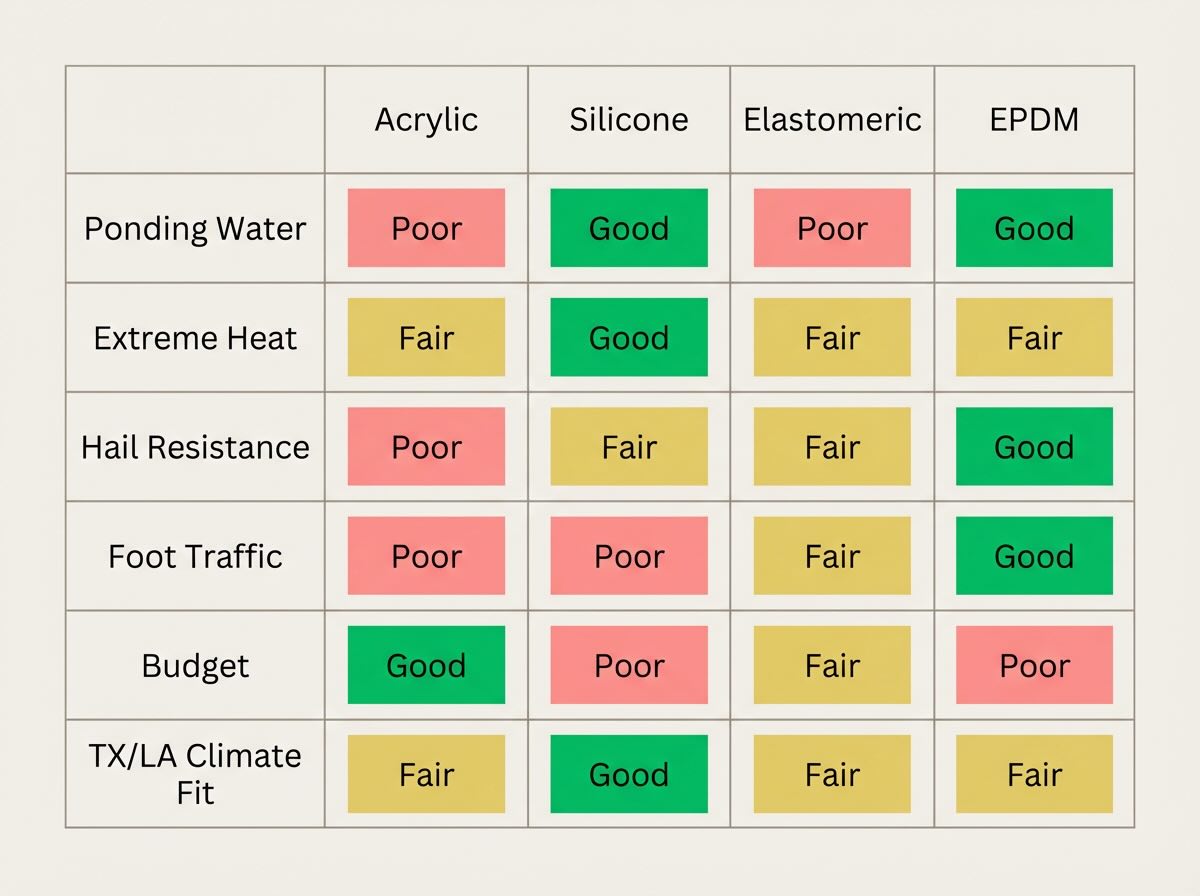
Acrylic is the most affordable option and the best performer in sunny, lower-humidity markets. It’s water-based, making application and cleanup straightforward.
Acrylic’s strength is reflectivity. A white acrylic coating reduces roof surface temperatures significantly, cutting the heat load transferred into the building. In Austin or San Antonio, where the sun is relentless and cooling costs are high, that benefit matters.
The limitation is water. Acrylic doesn’t hold up under ponding conditions. If a flat roof drains slowly or holds standing water for extended periods, acrylic softens and deteriorates. It’s also susceptible to cracking if applied too thin.
TX/LA context: Solid choice for Austin, San Antonio, and inland Texas, where ponding is less common. Avoid on Houston-area roofs where slow drainage is persistent.
Lifespan: 7 to 15 years.
Silicone Roof Coatings
Silicone is the go-to coating for roofs that see moisture. It resists ponding water completely. Unlike acrylic, silicone doesn’t absorb water, soften, or lose adhesion when water sits on the surface for extended periods.
Silicone’s reflectivity is excellent. It stays clean and UV-stable without chalking or degradation. On Gulf Coast buildings where heavy rainfall and slow-draining flat roofs are the norm, silicone is often the only coating worth considering.
The downsides are cost and recoatability. Silicone runs higher per square foot than acrylic. When recoating at end of life, only silicone bonds well to existing silicone, which limits future contractor options.
There’s also a foot traffic concern. Silicone is slippery when wet, so buildings with heavy rooftop equipment access should factor that in.
TX/LA context: The default recommendation for Houston, Beaumont, Port Arthur, Lake Charles, Lafayette, and anywhere along the Gulf Coast where ponding and high humidity are facts of life.
Lifespan: 15 to 20 years.
Elastomeric and Polyurethane Coatings
Elastomeric coatings prioritize toughness. They stretch and recover under thermal stress, making them highly resistant to cracking. Polyurethane offers the best impact resistance of any coating type, an important consideration in Texas hail country.
For commercial buildings in Austin or San Antonio, where summer heat pushes roof surface temperatures above 170°F and rapid nighttime cooling creates dramatic thermal cycling, elastomeric coatings handle these stresses better than thinner alternatives. For buildings with rooftop HVAC equipment, heavy foot traffic, or exposure to falling debris, the added toughness justifies the higher cost.
Surface prep matters more with these coatings. Labor costs reflect thorough preparation.
TX/LA context: Strong choice for Austin, San Antonio, and North Texas where 100°F-plus heat and thermal expansion create significant stress. Also, the best hail-resilience option throughout central and north Texas.
Lifespan: 10 to 15 years.
Rubberized EPDM Coatings
EPDM coatings are specialty products designed to restore existing EPDM (rubber membrane) roofs. They bond well to existing rubber substrate and restore flexibility and waterproofing to aging material.
The application range is narrower than the other three types. These coatings aren’t general-purpose solutions but rather targeted restoration products for rubber roofs that have dried out, cracked, or lost waterproofing integrity.
TX/LA context: Less common in Texas, but shows up on older commercial buildings, especially those built in the 1990s when EPDM was widely installed. If the existing roof is EPDM, this coating deserves a look before defaulting to silicone or acrylic.
Lifespan: 10 to 15 years.
Not sure which coating fits the specific roof? M&M Roofing’s commercial experts will assess the building for free. →
How Much Does Commercial Roof Coating Cost in Texas and Louisiana?
Property owners want a number. Here it is, with context.
Commercial roof coating in Texas typically runs $1.50 to $5.50 per square foot, depending on coating type, roof condition, and surface prep required. Compare that to full tear-off and replacement, which runs $8.00 to $15.00 or more per square foot for a commercial flat roof.
The table below shows estimated costs for a 5,000 square foot commercial roof, typical for a small warehouse, strip mall bay, or office suite.
| Coating Type | Cost Per Sq Ft | 5,000 Sq Ft Estimate | Lifespan |
|---|---|---|---|
| Acrylic | $1.50–$3.00 | $7,500–$15,000 | 7–15 yrs |
| Silicone | $2.50–$4.50 | $12,500–$22,500 | 15–20 yrs |
| Elastomeric / Polyurethane | $3.00–$5.50 | $15,000–$27,500 | 10–15 yrs |
| Full Replacement (comparison) | $8.00–$15.00+ | $40,000–$75,000+ | 20–30 yrs |
Prices reflect current Texas market rates. Costs vary by roof condition, surface prep required, number of coats, and local labor rates.
Several factors push costs toward the higher end. A roof with significant debris, ponding, mold, or loose material requires more prep time. Lifted fastener heads or opened seams need attention before coating is applied. The number of coats and whether a primer is needed also affect the total.
The long-term math favors coating when you account for reapplication. Most commercial coatings can be cleaned and recoated at the end of life for another full performance cycle. A building owner who chooses coating today may go 20 to 30 years before facing a replacement decision, at a fraction of the year-one replacement cost. The DOE’s research on cool roof coatings confirms that reflective roofing systems reduce cooling energy consumption in commercial buildings, adding financial value beyond extended roof life [1].
Is Your Roof a Good Candidate for Coating? (The 5-Question Test)
Not every roof qualifies. Coating a roof that needs replacement is money wasted. These five questions give a building owner a reliable first filter.
1. Is the roof deck structurally sound?
Walk the roof. Are there soft spots underfoot? Does the deck flex or deflect under weight? Any structural compromise disqualifies a roof. The membrane needs a solid substrate to bond to.
2. Is the insulation dry?
This is critical. Wet insulation holds moisture against the deck and promotes rot, mold, and continued deterioration. A coating seals the surface but does nothing to address wet insulation below. If moisture testing reveals saturated insulation, replacement is the right call. An infrared scan or nuclear moisture meter reading gives definitive answers.
3. Are leaks localized or widespread?
A handful of leak points, typically around penetrations, seams, or flashing details, is a coating candidate. Widespread leaking across the entire membrane suggests the membrane itself has failed. Coating is a band-aid on a systemic problem.
4. Is the existing membrane in reasonable condition?
Heavy delamination, severe cracking across large areas, or membrane separation from substrate means the coating won’t have a sound surface to bond to. Spot repairs on isolated areas are workable. Widespread membrane failure is not.
5. Does the roof have adequate drainage?
Flat roofs that drain slowly are common in Texas and Louisiana. If the roof holds water for more than 48 hours after rain, drainage needs attention. Silicone handles ponding well, but even silicone performs better on a properly draining surface. Severe drainage problems may need slope corrections before coating makes sense.
If most answers are yes, the roof is likely a coating candidate. If questions 1 or 2 are no, replacement is the honest recommendation.
Not sure about the answers? A free inspection from M&M Roofing answers all five questions in under an hour. →
The Commercial Roof Coating Process — What to Expect
One of the most common fears a building owner has is disruption. A full roof replacement means noise, debris, workers overhead for days or weeks, and the risk of interior damage during tear-off. Coating avoids almost all of it.
Here is what the process typically looks like.
Step 1: Inspection and Assessment
Before work begins, the crew evaluates the roof surface, checks drainage, probes for soft spots, and identifies areas needing repair before coating. This is where the candidacy questions get answered with professional equipment rather than guesswork.
Step 2: Surface Preparation
Pressure washing removes dirt, biological growth, and loose material. Open seams, lifted fasteners, or minor membrane damage get repaired at this stage. A clean, sound surface is the foundation of a coating that performs for its full rated life.
Step 3: Primer (If Required)
Some surfaces benefit from a primer coat to maximize adhesion. Metal roofs and certain older membranes typically require it. The coating spec determines whether this step is necessary.
Step 4: First Coat Application
The coating goes on by spray, roller, or brush depending on product and surface geometry. Penetrations, seams, and drains receive extra attention to ensure complete coverage at leak-prone points.
Step 5: Second Coat
Most systems require two coats to reach specified dry film thickness. The second coat applies after the first has cured sufficiently, typically within a few hours on a warm dry day.
Step 6: Final Inspection and Cure
The crew inspects coverage and thickness. Full cure takes 24 to 72 hours depending on product and weather. The roof is back in service with no tear-off debris, no dumpsters, and no extended construction timeline.
Most commercial coating projects complete in one to two days. Compare that to full replacement, which takes a week or longer and leaves the building exposed to weather.
Commercial Roof Coatings in Texas and Louisiana — What the Climate Demands
National roofing guides treat all flat roofs the same. The Gulf Coast is not the same as Denver or Phoenix, and a coating recommendation that ignores that reality is incomplete.
M&M Roofing has worked on commercial buildings across Texas and Louisiana since 1983. The climate insights here come from four decades of watching how different coating systems actually perform against the conditions these roofs face.
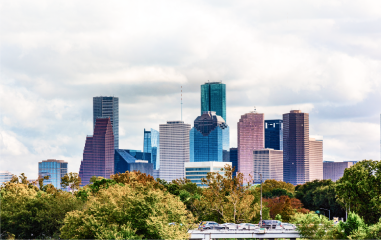
Houston, Beaumont, and the Gulf Coast
The Gulf Coast presents two defining problems: humidity and water. Average annual rainfall in Houston exceeds 50 inches [2]. Flat commercial roofs drain slowly. Standing water after rain is not the exception. It is the norm for many buildings.
In this environment, silicone is the standard recommendation. It doesn’t degrade under ponding conditions. It doesn’t absorb moisture. It holds its reflectivity through years of humid conditions without chalking or peeling.
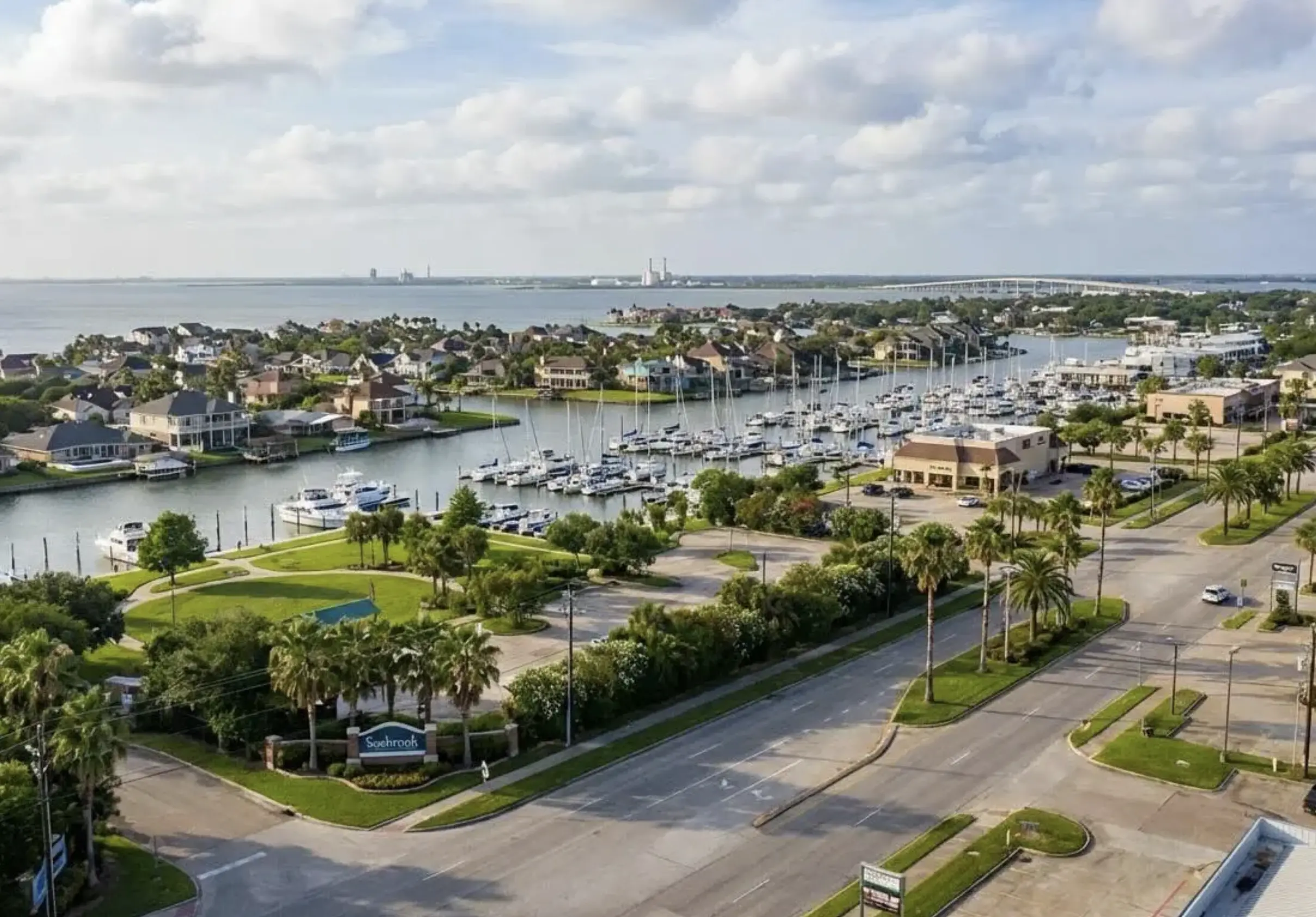
Salt air along the coast adds another dimension. For commercial buildings near Seabrook, Clear Lake, Galveston, or coastal Louisiana, a quality coating adds a protective layer against the corrosive effect of salt-laden air on metal roof elements and fasteners.
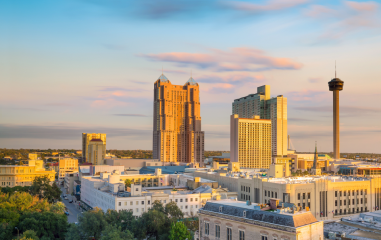
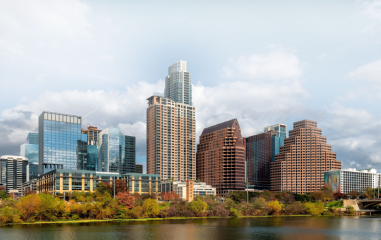
Austin, San Antonio, and Inland Texas
Inland Texas operates under different conditions. Humidity is lower. Rainfall is less frequent. Heat is intense. Austin averages 300 sunny days per year. Roof surface temperatures on a dark commercial membrane in July exceed 170°F.
That heat does two damaging things. It degrades membrane materials faster through UV oxidation. It creates thermal cycling, where the roof surface expands significantly during the day and contracts at night, stressing seams and fasteners over time.
Reflective coatings address both problems directly. ENERGY STAR-rated roof coatings reduce roof surface temperatures by 40 to 60 degrees Fahrenheit on a sunny summer day [3], reducing thermal stress on the membrane and the cooling load transferred into the building. For a commercial building running air conditioning six or more months a year, those energy savings add up.
Elastomeric coatings handle thermal cycling better than acrylic. The stretch and recovery characteristic keeps the coating intact through temperature swings that would crack a less flexible material.
Hail Markets Throughout Texas
Hail is a legitimate risk across central and north Texas. Austin and San Antonio see significant hail seasons. NOAA research confirms that large hail events cause substantial property damage throughout the southern plains region [4]. Polyurethane and elastomeric coatings provide the best impact resistance of any coating type and are worth the premium in hail-prone markets. They won’t make a roof hail-proof, but they absorb impact better than thinner alternatives and prevent minor hail strikes from creating punctures or accelerating membrane degradation.
How Long Does a Commercial Roof Coating Last?
The honest answer depends on coating type, installation quality, and the climate conditions the roof faces.
Acrylic coatings in dry climates last 7 to 15 years. In a high-humidity Gulf Coast environment with ponding water, that lifespan is shorter if acrylic is used where silicone belongs. Elastomeric and polyurethane coatings typically last 10 to 15 years in Texas conditions. Silicone coatings, properly installed, last 15 to 20 years.
Maintenance extends that lifespan. Annual inspections that catch minor damage early, cleaning that prevents biological growth, and prompt repair of mechanical damage from rooftop equipment or foot traffic all add years to coating performance.
At end of life, most commercial coatings can be cleaned and recoated for another full performance cycle. This is a significant advantage over replacement. A building owner who invests in quality coating today, maintains it properly, and recoats at the appropriate interval may never need full replacement for the life of the building.
A reputable contractor should provide a written warranty covering both materials and labor. M&M Roofing backs its installations with a warranty that covers the work, not just the product, which is still rare in this industry.
Coating vs. Replacement — Making the Right Call
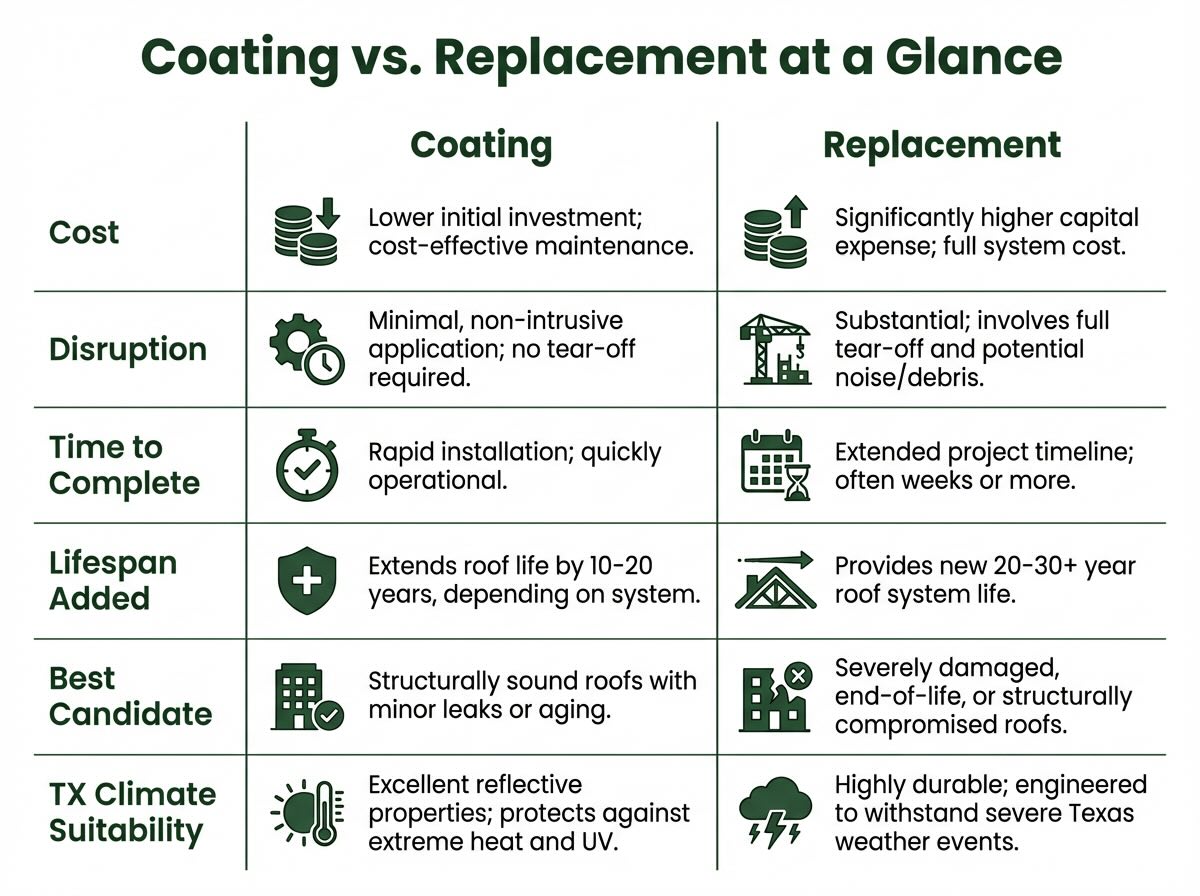
Here is the honest framework. Coating is right for some roofs. Replacement is right for others. A contractor who only sells one answer is not giving honest advice.
Doug Moncure founded M&M Roofing in 1983 and has personally inspected thousands of commercial roofs across Texas and Louisiana in the four decades since. That experience teaches something that shortcuts don’t: you cannot know what a roof needs until standing on it with the right equipment, looking at the right indicators.
| Scenario | Right Call | Why |
|---|---|---|
| Roof deck solid, insulation dry, localized leaks | Coating | Structurally sound substrate; coating addresses the problem |
| Surface wear, aging membrane, adequate drainage | Coating | Membrane has life left; coating adds 10–20 more years |
| Wet insulation found during inspection | Replacement | Coating cannot fix moisture below the surface |
| Structural damage or deck rot | Replacement | No coating bonds reliably to a compromised substrate |
| Widespread membrane failure, leaks everywhere | Replacement | Systemic failure — coating is a band-aid, not a fix |
| Already coated once, at true end of life | Replacement | Another coating cycle won’t solve an exhausted system |
The goal of an honest assessment is the right answer for the building, not the answer with the higher ticket price. Sometimes that is a $12,000 coating job. Sometimes it is a $60,000 replacement. The building owner deserves to know which one and why, based on evidence rather than a contractor’s sales preference.
M&M Roofing’s approach has always been straight answers. That is how a roofing company stays in business for 40 years in competitive markets. After every commercial roof inspection, Doug makes a personal follow-up call to walk the owner through findings. It is not a sales call. It is the answer.
Commercial Roof Coating Right For You?
A well-applied commercial roof coating is one of the smartest investments a Texas or Louisiana building owner can make. But only when the roof qualifies. The cost savings are real, the lifespan extension is meaningful, and the disruption is minimal compared to full replacement.
The key is working with a contractor who tells the truth about whether coating or replacement is the right call. That starts with an honest inspection, not a sales pitch.
Schedule a free commercial roof assessment with M&M Roofing. → The team will assess the roof, answer all five candidacy questions, and give a straight recommendation: coating or replacement, whichever the building actually needs.
Frequently Asked Questions
What is a commercial roof coating?
A commercial roof coating is a fluid-applied, seamless membrane sprayed or rolled onto an existing commercial roof to seal leaks, reflect UV rays, and restore waterproofing. It extends the roof’s life by 10 to 20 years without tear-off or replacement.
How much does it cost to coat a commercial roof?
In Texas, commercial roof coating typically costs $1.50 to $5.50 per square foot, depending on coating type and roof condition. A 5,000 square foot commercial roof generally runs $7,500 to $27,500, compared to $40,000 to $75,000 or more for full replacement.
How long does a commercial roof coating last?
Lifespan depends on coating type. Acrylic lasts 7 to 15 years, elastomeric and polyurethane last 10 to 15 years, and silicone can last 15 to 20 years. Most coatings can be reapplied at the end of life for another full cycle.
Can any commercial roof be coated?
No. A roof must be structurally sound with dry insulation to qualify. Roofs with wet insulation, significant structural damage, or widespread membrane delamination typically require full replacement. A professional inspection determines candidacy.
What is the best commercial roof coating for Texas heat?
For Austin and San Antonio, elastomeric or high-reflectivity acrylic coatings handle extreme UV and thermal expansion well. For Houston and the Gulf Coast, silicone is preferred for its superior resistance to ponding water and high humidity.
How do roof coatings extend the life of commercial flat roofs?
Roof coatings create a seamless, waterproof barrier that prevents moisture infiltration, reflects UV radiation that degrades roofing membranes, and adds flexibility to aging surfaces that would otherwise crack. This protective layer eliminates the need for costly repairs or full replacement, typically for 10 to 20 more years.
References
[1] U.S. Department of Energy — Cool Roofs
[2] NOAA National Centers for Environmental Information — Houston Climate Data