












What Homeowners Insurance Typically Covers in Texas
Most standard homeowner insurance policies in Texas (known as HO-3 policies) cover roof damage caused by sudden and accidental events. That usually includes:
- Hail and high winds
- Falling trees or flying debris
- Fire or lightning
These are considered “covered perils”, which are things that happen unexpectedly and cause significant damage.
However, insurance doesn’t cover normal wear and tear. If your shingles are simply old, curling, or cracked from age or poor installation, you’ll likely have to pay for repairs yourself.
Some insurers in Texas have also started adjusting how they handle payouts. Instead of covering the full replacement cost, many now issue policies based on actual cash value (ACV). This means they subtract depreciation (the age and condition of your roof) before paying your claim. Others still offer replacement cost value (RCV) coverage, which pays for a brand-new roof at current prices, minus your deductible.
Understanding Roofing Insurance Terms: RCV vs. ACV
When reviewing your policy, you’ll come across two important terms:
Replacement Cost Value (RCV)
An RCV policy pays the full cost to replace your roof with new materials at today’s prices, minus your deductible. This is the most homeowner-friendly option because you’ll get a brand-new roof without losing value due to age.
Actual Cash Value (ACV)
An ACV policy pays only for the depreciated value of your roof. So if your roof is 15 years old and has lost 50% of its value, your insurance payout will reflect that reduction. You’ll need to pay the difference out of pocket if you want a full replacement.
Deductibles
Texas insurance policies often include percentage-based deductibles — usually between 1% and 2% of your home’s insured value. That means if your home is insured for $400,000 and you have a 2% deductible, you’ll pay $8,000 before insurance kicks in.
Example:
Let’s say your roof replacement costs $20,000.
- If you have RCV coverage with a $2,000 deductible, you’ll pay $2,000, and insurance covers the rest.
- If you have ACV coverage and your roof’s value has depreciated 50%, you may receive only $10,000 minus your deductible, leaving you to cover the remaining $10,000 yourself.
How to File a Roof Insurance Claim in Texas
Filing a claim doesn’t have to be stressful if you take it step by step. Here’s the process most homeowners follow:
Step 1: Inspect and Document the Damage
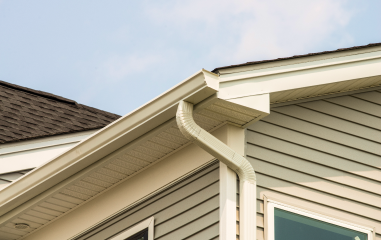
After a storm, check your roof for missing shingles, dents, or leaks. Take clear photos and videos of everything, including damage to gutters, vents, and flashing.
Note: We don’t recommend going on your roof to document the damage. Let a trained roofing contractor do that.
Step 2: Contact a Reputable Roofing Contractor
Before filing your claim, schedule a free roof inspection with a licensed, local roofer like M&M Roofing, Siding, and Windows.
A professional inspection ensures you have accurate documentation and helps determine if damage is severe enough to justify a claim.
Step 3: File Your Claim
Contact your insurance company and submit the claim along with photos, your contractor’s estimate, and any storm reports if available.
Step 4: Meet with the Adjuster
Your insurance adjuster will inspect the damage. It’s extremely helpful to have your roofing contractor meet the adjuster on-site to ensure no damage is overlooked.
Step 5: Review the Estimate
Once the adjuster submits their report, your insurance company will provide a claim summary outlining what’s covered and how much they’ll pay. Review it carefully with your contractor. Sometimes line items or measurements are missing.
Step 6: Get the Roof Replaced
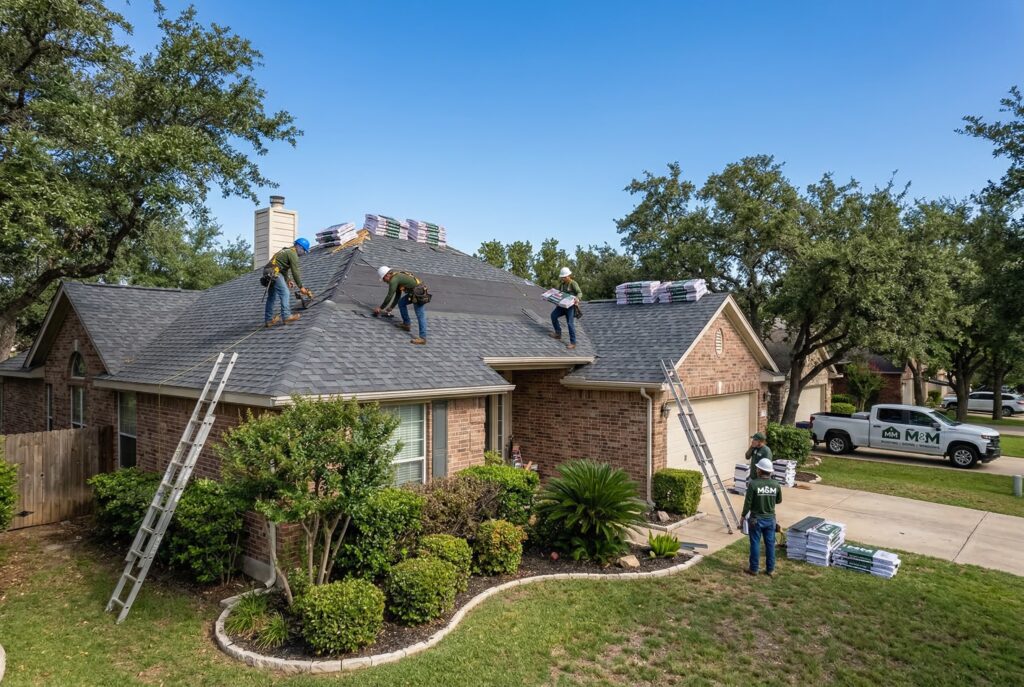
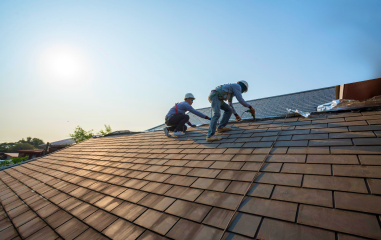
After your claim is approved, your roofer will begin the repair or replacement work. You’ll usually receive two payments: one upfront (minus your deductible) and a final payment once the work is complete and verified.

Key Things Homeowners Should Know
There are a few things you need to know when it comes to filing a roof insurance claim.
Beware of Storm Chasers
After major storms, out-of-state companies often flood Texas neighborhoods, promising fast and cheap repairs.
Many disappear before completing the job or honoring warranties. Always choose a local, established roofing company with real offices and reviews.
Two-Year Limit to File a Claim
Texas gives homeowners up to two years from the date of damage to file a claim. However, waiting too long can make it harder to prove that a storm caused the damage, so it’s best to act quickly.
Permits and Building Codes Matter
If your local municipality updates roofing codes (for example, requiring higher wind ratings), your insurance may or may not cover the cost of bringing your roof up to code. Check if your policy includes ordinance or law coverage.
How Roof Age and Material Affect Your Coverage
Your roof’s age and material can make a big difference in how your insurance claim is handled:
- 10–15 Years Old: Many insurers start reducing coverage after this point, especially for asphalt shingle roofs.
- Metal or Tile Roofs: These last longer and often maintain full coverage for more years.
- Older Roofs: If your roof is 20+ years old, you might only qualify for ACV coverage, or some insurers may refuse to renew until it’s replaced.
Depreciation schedules vary by insurer, but in general, newer roofs receive larger payouts.
Tips for Working with Your Roofing Contractor and Insurance Company
A smooth claim depends on teamwork between you, your roofer, and your insurance adjuster. Keep these best practices in mind:
- Work with a local roofer. M&M Roofing has been serving Texas homeowners for over 40 years, and we know exactly how to navigate roof insurance claims.
- Keep all documents organized. Save photos, adjuster reports, and communication logs.
- Review everything before signing. Make sure the insurance scope of work matches what your roofer plans to do.
- Avoid assigning benefits without understanding them. Some contractors ask you to sign an Assignment of Benefits (AOB) form, which gives them control of your claim. Always read it carefully.
- Stay in communication. Respond promptly to your insurer and contractor to avoid delays.
We Can Help
For over four decades, M&M Roofing, Siding, and Windows has helped Texas homeowners navigate the insurance process with confidence. We’ve seen every kind of storm and every kind of claim, and we know what it takes to get fair coverage.
When you call M&M Roofing, you get:
- Free roof inspections and damage reports after hail, wind, or hurricane events.
- Assistance with documentation and communication with your insurance company.
- On-site support during adjuster inspections to make sure no damage is overlooked.
- Quality workmanship and warranties backed by more than 1,000 five-star reviews.
We’re local, trusted, and here long after the storm chasers leave town.
If you think your roof may have damage, don’t wait. Texas weather doesn’t give second chances, and neither do insurance deadlines.
Contact M&M Roofing, Siding, and Windows today for a free, no-obligation roof inspection.
We’ll walk you through every step of the process and make sure your home gets the protection it deserves.
Final Thoughts
Understanding roofing insurance in Texas can feel complicated, but it doesn’t have to be. The key is knowing what your policy covers, how to file a claim, and who to trust along the way.
When you partner with an experienced, local company like M&M Roofing, Siding, and Windows, you gain an advocate who knows the system inside and out and who genuinely cares about restoring your home.
Schedule your free inspection today and let us help you protect what matters most: your home and your peace of mind.