






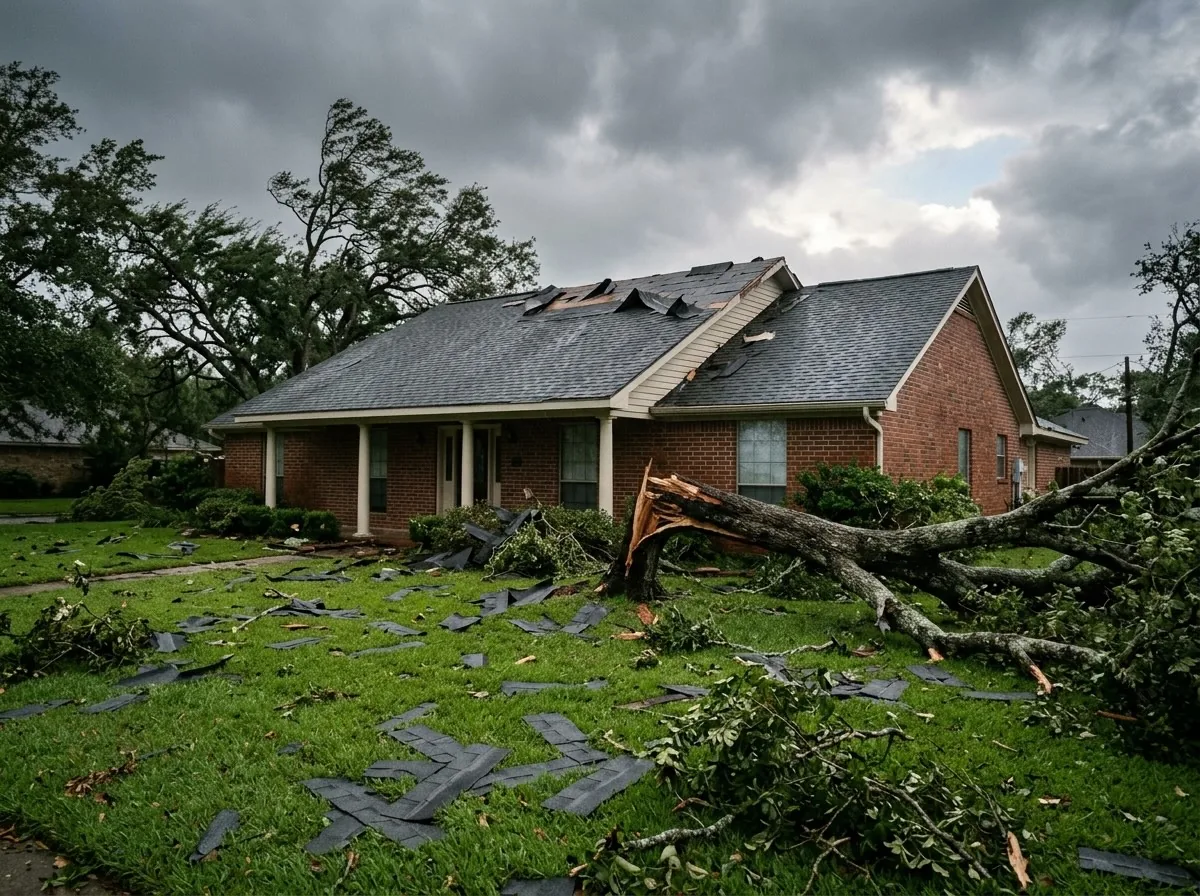
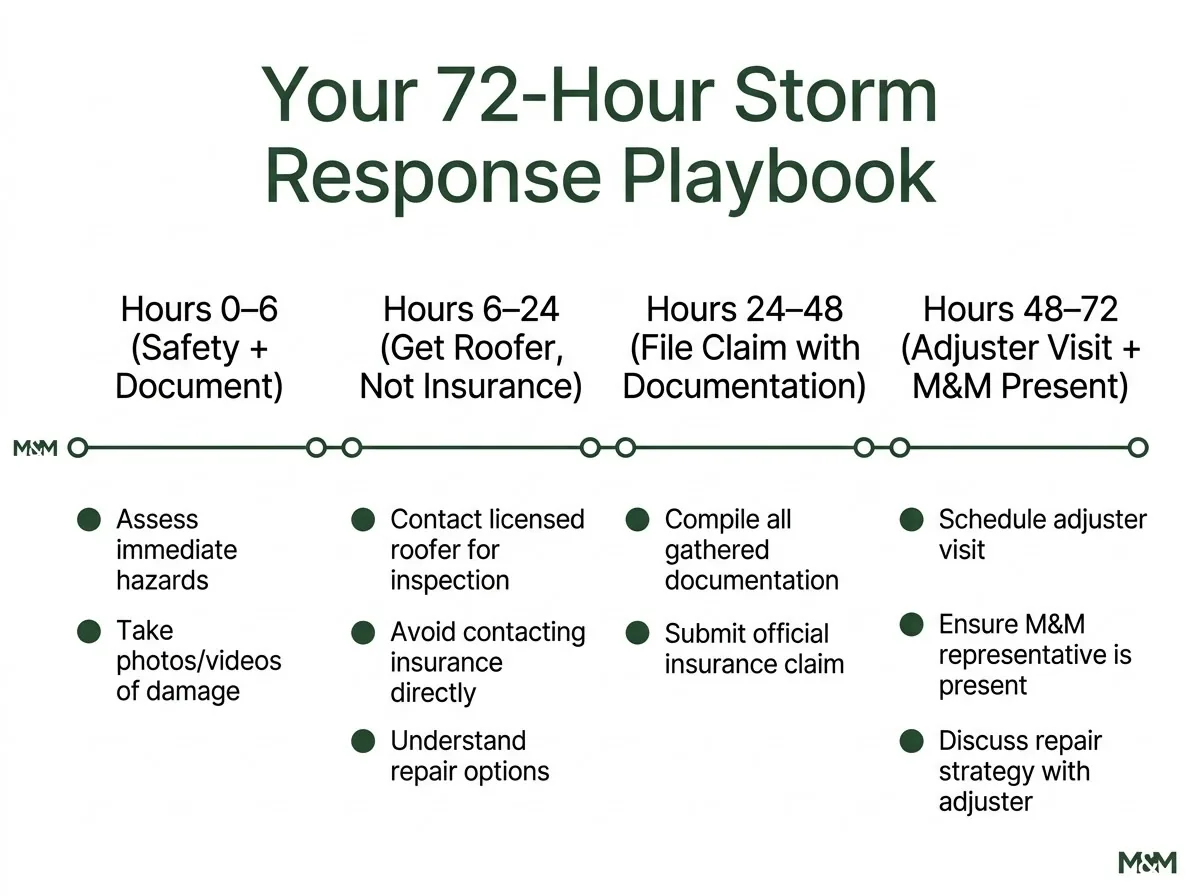
In the 72 hours after a storm damages your Beaumont roof, three things need to happen in order: document the damage with photos before anything is touched, contact a licensed local roofer for an inspection before calling your insurance company, and file your claim while storm-specific damage is still clearly attributable. The Texas Department of Insurance advises homeowners to file promptly. The longer you wait, the harder it becomes to distinguish storm damage from pre-existing conditions, which is the most common basis for claim denial. M&M Roofing serves Beaumont and Jefferson County with same-day storm inspections and provides photo documentation formatted for Texas insurance claims.
The storm passed. Your neighborhood looks different. There’s debris in the yard, a neighbor’s fence is down, and you think you heard something hit the roof. But you can’t tell from the ground what actually happened up there.
You have 72 hours. Here’s exactly what to do with them.
Most homeowners make one of two mistakes in this window. They either call their insurance company before they have any documentation, which puts the insurer in the driver’s seat from the start, or they wait a week to “see if anything leaks.” Both decisions hurt your claim. Both are avoidable.
This guide is a step-by-step playbook organized by the 72-hour window for Beaumont homeowners navigating the hours after a storm.
Why 72 Hours Is the Critical Window in Southeast Texas
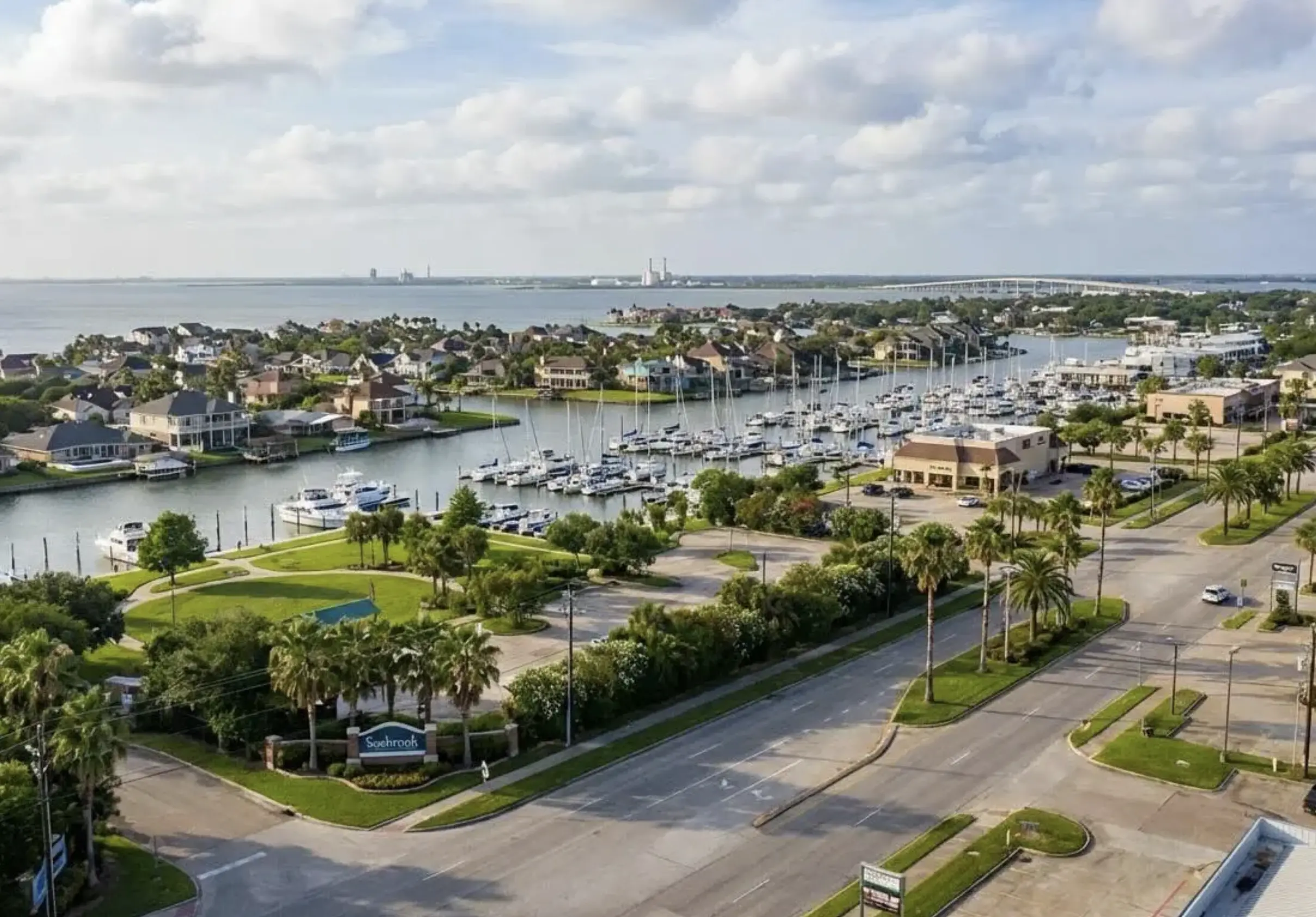
Beaumont isn’t like Austin or San Antonio when it comes to storm damage. This city has been through Harvey (2017), Tropical Storm Imelda (2019), Laura (2020), Ida (2021), and Nicholas (2021). That’s more named storm impacts in a single decade than most Texas markets see in a generation. Jefferson County sits squarely in one of the most storm-stressed residential markets in the state.
That history matters for your insurance claim. Jefferson County is a Texas Windstorm Insurance Association (TWIA) coverage zone. Many Beaumont homeowners carry TWIA wind policies in addition to standard homeowners coverage. TWIA adjusters and standard insurance adjusters working this market have processed thousands of storm claims in the past eight years. They’re experienced. They also know exactly what storm-specific damage looks like versus cumulative wear.
That’s why your documentation window matters. When an adjuster visits a Beaumont home three weeks after a storm, some evidence has degraded. UV exposure starts working on exposed shingle edges immediately. Dried moisture stains lose their sharp perimeter. Wind uplift patterns fade as shingles resettle. The storm-specific fingerprints that are unmistakable at 72 hours become arguable at three weeks.
There’s also a physical reality unique to Southeast Texas. Beaumont’s annual humidity averages between 74% and 81%, and the area receives more rainfall than anywhere else in Texas: over 65 inches per year. [2] When a storm breaches a roof surface, moisture intrusion here advances faster than in drier markets. A lifted shingle at Hour 1 can mean saturated insulation by Hour 24. Waiting doesn’t just risk a weaker claim. It risks real interior damage that’s harder to attribute to the storm event rather than “improper mitigation.”
Act fast. Document everything. Prevent secondary damage.
| Beaumont Climate Factor | Why It Matters for Your Claim |
|---|---|
| 74–81% average annual humidity | Moisture intrusion accelerates faster than in dry TX markets |
| 65+ inches of rainfall per year | Standing water on breached roofs within hours of a storm |
| 5 named storms since 2017 | Adjusters are experienced at pre-existing condition arguments |
| TWIA coverage zone | Separate wind policy requires separate documentation and filing |
Hours 0–6: Your Job Before Anyone Calls Anyone
The first six hours belong to you, not to contractors and not to your insurance company. Do these three things before you make a single call.
Step 1: Safety Check First
Don’t go on the roof. Don’t walk near obvious structural damage. Check for gas smells, downed power lines near the house, and any visible structural failures. If you see any of those, address safety before everything else. Your roof can wait. A downed line cannot.
Step 2: Document From the Ground, Then From Inside
Start taking photos and video immediately: before any cleanup, before any tarps, before anything is moved. This is the single most important thing you’ll do in this entire process.
Photograph all of this:
- The exterior of the house from all four sides
- Any visible roof damage from ground level
- The yard: debris, hail accumulation, fallen limbs near the structure
- Your neighbors’ properties showing storm impact (this establishes the event was widespread, which matters when insurers raise pre-existing condition arguments)
- Inside the home: ceiling stains, visible wet insulation in the attic, water on floors
Use your phone’s native camera. The GPS metadata embedded in each photo timestamps and locates every image automatically. Don’t filter, crop, or edit. Back up everything to email or cloud storage before you do anything else.
Step 3: Temporary Protection for Active Leaks
If water is actively entering the home, you have a duty to mitigate under your insurance policy. Temporary tarping satisfies that requirement. Keep all receipts for any materials you purchase. Document the damage with photos before placing the tarp, and document the tarp placement after. If you’re not comfortable on the roof, especially in wet conditions or after dark, M&M provides emergency tarping with same-day availability for requests before noon.
Hours 6–24: Get a Roofer on Your Roof Before You Call Insurance
This is the most counterintuitive advice in this article. And it’s the step homeowners most often skip.
Most people call their insurance company first. That’s backward.
Your insurance adjuster is not on your side. That’s not a cynical statement. It’s an accurate description of their role. They’re assessing liability for their company. When they walk your roof, they’re looking for reasons the damage might be pre-existing, cumulative, or improperly mitigated. Their report becomes the basis for your settlement.
A professional inspection before the adjuster’s visit changes the dynamic. You have independent documentation of what the storm caused. You understand what you actually have before someone tells you what they’re willing to cover. And your roofer can be present during the adjuster’s visit.
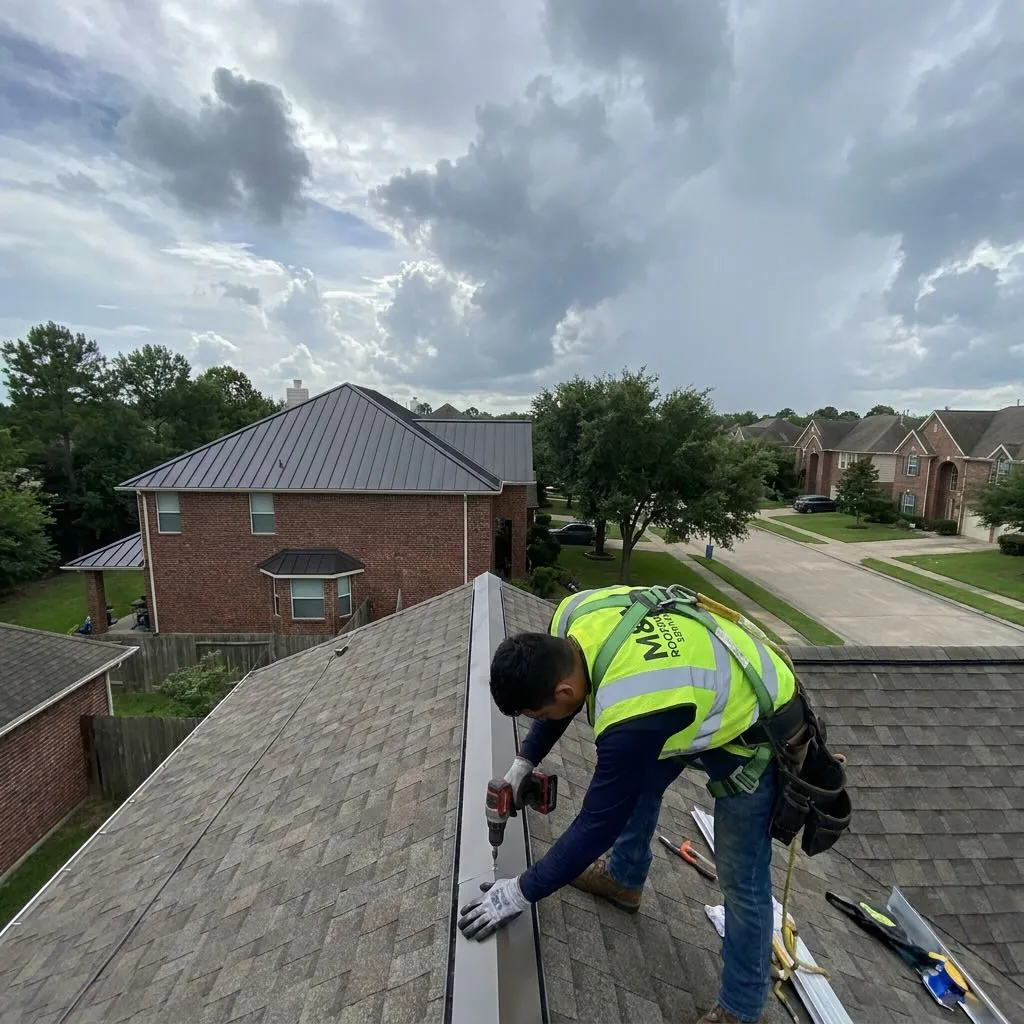
M&M accompanies clients during adjuster visits as standard practice. Having a professional on-site who can point to documented damage and explain storm causation directly changes outcomes. The M&M storm inspection includes a full roof surface walk, photo documentation of every finding with GPS timestamp, attic inspection for moisture intrusion, and a written report formatted for insurance claim submission.
This inspection is free. You’re not committing to anything. You’re getting documentation before you need it.
For residents of Port Arthur, Orange, Nederland, and Port Neches, M&M covers the entire Golden Triangle. Don’t call insurance until you have this documentation in hand. Learn why calling the roofer first always produces better outcomes, and what to expect when your adjuster does show up.
Ready to get M&M on your roof before the adjuster? Schedule your same-day inspection →
What M&M Documents on Beaumont Roofs After a Storm
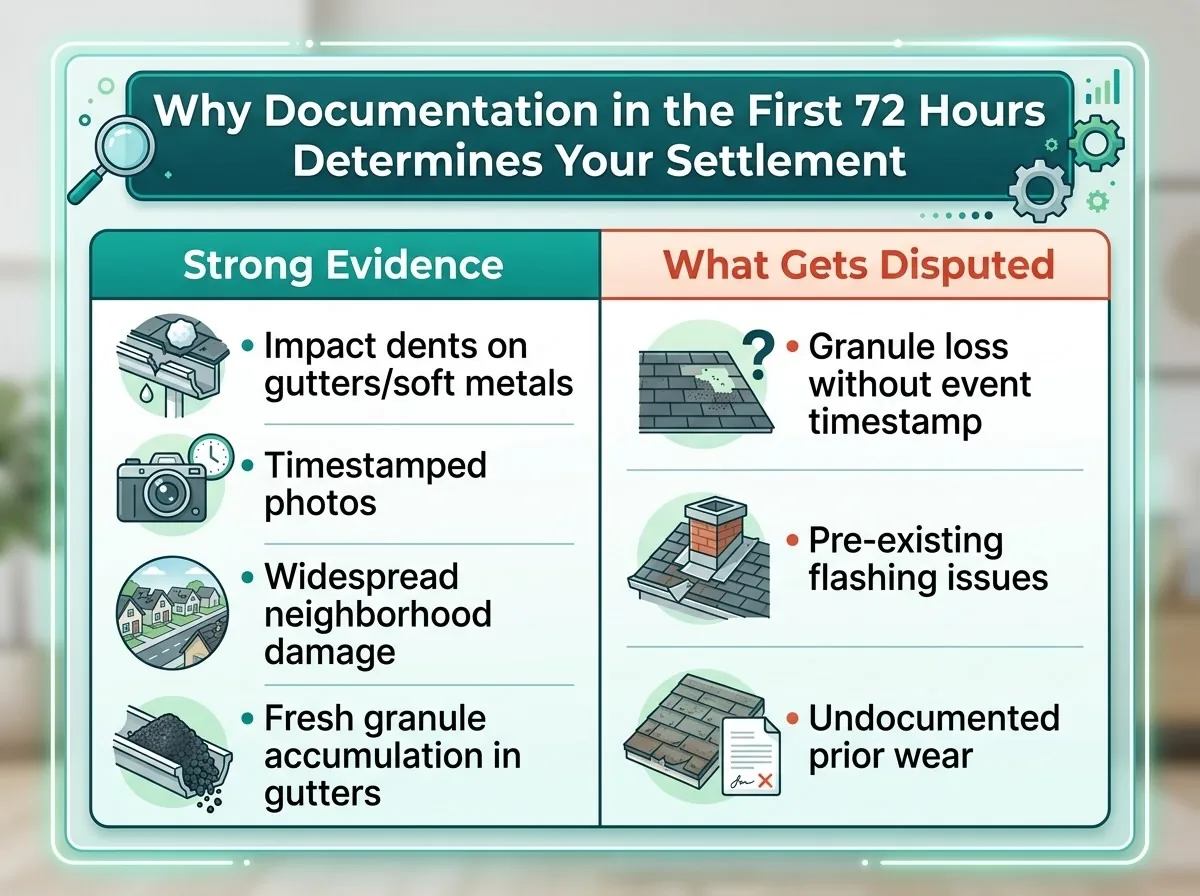
Southeast Texas insurance adjusters have processed thousands of Harvey, Laura, and Imelda claims. They’re specifically trained to look for pre-existing condition arguments: granule loss from prior wear, flashing failures that predate the storm, ridge caps that were already lifting.
M&M’s documentation protocol is built to counter those arguments. Here’s the sequence M&M crews follow when arriving at a Beaumont home after a storm, in the order it matters for your claim:
Wide establishing shots of the entire roof surface before any debris is cleared. This captures the storm’s impact pattern before anything is disturbed. It’s the before-picture your adjuster doesn’t have.
Close-up of every impacted shingle with a measurement reference. A coin or ruler in frame documents hail diameter. Hail size matters. Larger stones create deeper bruising that’s harder to argue as pre-existing.
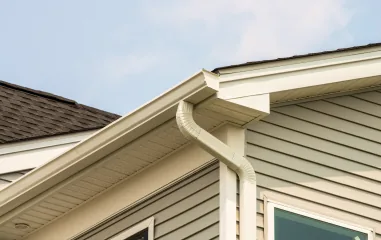
The granule pattern in gutters. Fresh granule loss from a storm event shows a specific distribution pattern distinct from chronic wear. Chronic wear granules accumulate slowly over months. Storm-event granules fill gutters in a single event. The difference is visible to any experienced inspector.
Wind uplift patterns. How shingles lifted in sequence shows wind direction and establishes event-specific cause. A shingle that lifted against the dominant wind direction of the storm date is essentially impossible to argue as pre-existing.
Impact marks on soft metals. Gutters, drip edge, flashing, and vent caps. These are the most unambiguous storm indicators on any Beaumont roof. Hail strikes leave distinct circular dents that cannot be attributed to wear. When an adjuster tries to argue pre-existing conditions on a disputed claim, soft metal documentation is what ends the argument.
Attic photos. Any moisture intrusion or deck stress from wind uplift documented from inside.
The homes with this documentation in hand before the adjuster visit get faster, cleaner settlements. After the 2023 Southeast Texas tornado outbreak, M&M documented three homes in Nederland where undisputed hail strikes on soft metals were the deciding factor in claims that otherwise would have been contested as pre-existing wear. Those homeowners had their settlements within three weeks. Their neighbors, who waited, had claims disputed for months.
Jefferson County adjusters often visit Beaumont homes two to four weeks post-storm when the market is saturated after a named event. By that point, secondary UV exposure and normal weathering have softened some storm-specific indicators. The homeowners with pre-adjuster documentation are in a different position entirely.
M&M has documented hundreds of Southeast Texas storm claims. Let us build your file before the adjuster arrives →
Hours 24–72: Filing Your Claim and What Comes Next
Once you have documentation and an inspection report, you’re ready to file.
Contact your insurer to report the claim. Have your policy number, the date and nature of the storm, and your organized photo documentation ready before you call. Know whether you’re filing under a standard homeowners policy or a separate TWIA wind policy. Many Beaumont homeowners have both, and they cover different things.
Request an adjuster appointment and ask for the earliest available date. In a widespread named storm event, adjusters are overwhelmed. Request your appointment in writing and keep a record.
Have M&M present during the adjuster visit. The adjuster’s written report is what determines your settlement. A professional who can point to documented damage and explain storm causation has a direct effect on what gets included.
Submit temporary repair documentation. If M&M tarped your roof or you did it yourself, that documentation goes to your insurer as covered emergency mitigation. Keep receipts.
Understand the supplement process. Sometimes the first adjuster estimate misses items: missed flashing, underdocumented gutters, skipped drip edge. M&M helps clients identify and document items for supplement claims. This is a normal part of the process in a high-volume storm market like Beaumont.
One important note on timelines: under Texas law, homeowners have one year from the date of loss to file a claim for most weather events. [3] The 72-hour principle isn’t about the legal deadline. It’s about evidence quality.
Read the full guide on how to get insurance to pay for a roof replacement in Texas to understand what happens after you file.
Storm Chasers: What to Watch Out For in Beaumont
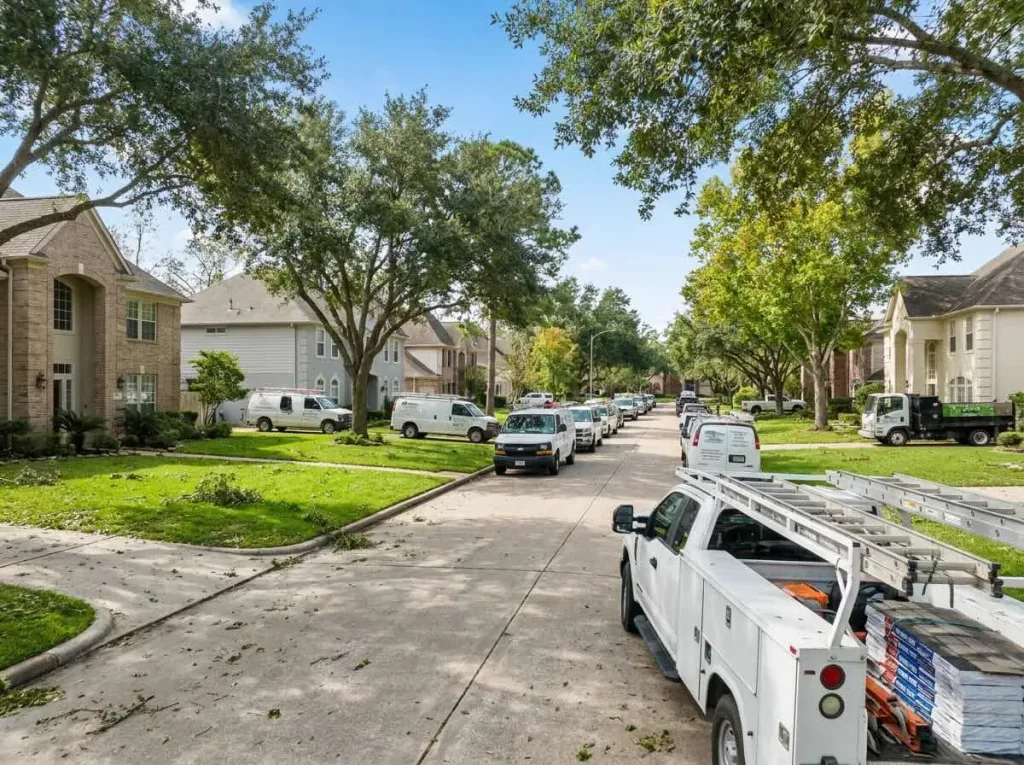
After every significant Gulf storm, out-of-state contractors flood Beaumont and Jefferson County. Here’s how to separate them from legitimate local companies.
Red flags: contractors who arrive unsolicited and pressure you to sign an Assignment of Benefits (AOB) agreement before an inspection is complete. An AOB transfers your right to insurance proceeds to the contractor. Once you sign it, you’ve lost control of what gets claimed and what gets built.
Also illegal in Texas: any contractor who offers to cover your deductible. Under Texas House Bill 2102 (effective 2019), offering to waive or cover a homeowner’s deductible is a criminal offense: a Class B misdemeanor for a first offense. [3] A contractor making this offer is in violation of state law. Report violations to the Texas Attorney General’s Consumer Protection Hotline at 800-621-0508.
Before allowing any contractor on your roof, verify their Texas contractor license at license.tdlr.texas.gov and confirm a physical Texas address. Not a P.O. box.
M&M has served Southeast Texas since 1983. This is not a post-storm deployment. It’s M&M’s permanent market.
The Bottom Line for Beaumont Homeowners After a Storm
The 72 hours after a storm aren’t about panic. They’re about getting ahead of your claim with the right documentation, in the right order, before your insurer’s adjuster visits on their schedule.
The homeowners who do this right protect their settlement. The ones who wait, or call insurance first without documentation, often spend months fighting for what they should have been paid upfront. In a TWIA market like Jefferson County, that fight is harder than it needs to be unless you walk in with the right file.
M&M provides free storm inspections, same-day scheduling for requests before noon, and accompanies clients during adjuster visits as standard practice. Schedule your free storm damage inspection today →
Frequently Asked Questions
Should I call my insurance company or a roofer first after a storm in Beaumont?
Call a roofer first. Getting an independent inspection and photo documentation before your insurer’s adjuster visits puts you in a significantly stronger position for your claim. M&M Roofing provides free storm inspections and accompanies clients during the adjuster visit as standard practice.
How long do I have to file a storm damage claim in Texas?
Texas law gives homeowners one year from the date of loss to file a weather-related insurance claim. The practical case for acting within 72 hours is about evidence quality. Storm-specific damage indicators are clearest immediately after the event. Waiting weeks allows secondary weathering to blur the causal attribution, which is the primary basis for claim denial.
Can I put a tarp on my own roof after a storm?
Yes, if you can do so safely in dry conditions during daylight with stable access. Temporary tarping satisfies your duty to mitigate under your insurance policy, and costs are typically reimbursable. Document the damage before placing the tarp. Photograph everything first. If you’re not comfortable on the roof, M&M provides emergency tarping.
What if storm chasers are already at my door?
You’re not obligated to let anyone on your roof. Get a business card, verify they hold a Texas contractor license and have a physical local address, and never sign an Assignment of Benefits agreement before you’ve reviewed the full scope of work and your documentation is in order.
Will my insurance rates go up if I file a storm damage claim in Texas?
Texas is a weather-volatile state, and most carriers understand this. A single storm claim typically does not trigger a rate increase. However, policies and carriers vary. Contact your agent to understand your specific policy’s claim history implications before filing.
What is TWIA, and does it affect my Beaumont storm claim?
The Texas Windstorm Insurance Association provides wind and hail coverage for properties in coastal counties including Jefferson County. Many Beaumont homeowners carry both a standard homeowners policy and a separate TWIA policy. They cover different types of damage and have different claims processes. Your roofer and insurance agent can help identify which applies to your storm event.
References
[1] Insurify — Texas Windstorm Insurance and TWIA Explained
[2] Wikipedia — Climate of Beaumont, Texas
[3] Texas Department of Insurance — Roofing and Insurance: Know the Law