











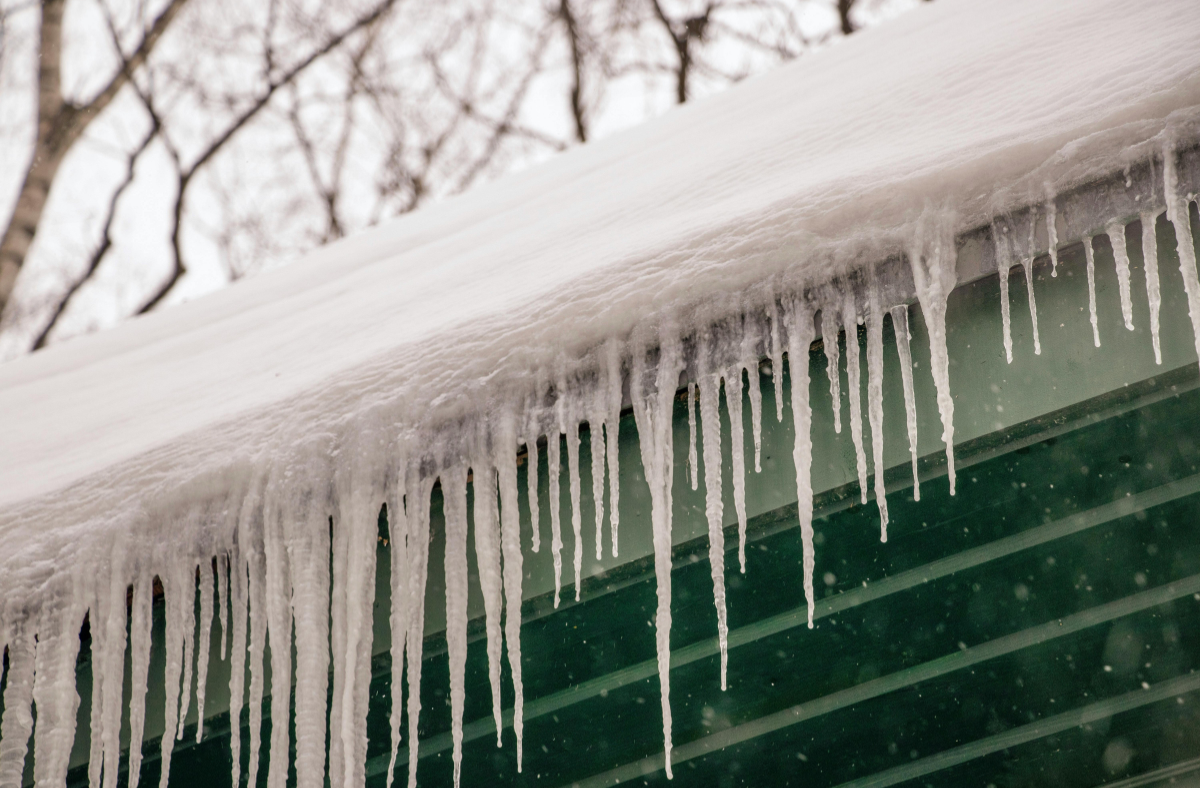
1. Start With a Visual Roof Inspection
You do not need to climb onto your roof to spot many common problems. A visual inspection from the ground can reveal a lot.
Walk around your home and look for missing, cracked, or curling shingles. Pay close attention to roof edges, valleys, and areas around chimneys or vents. If something looks uneven or out of place, that is often a sign of wind damage.
Inside your home, check ceilings and attic spaces for water stains, dark spots, or peeling paint. These are early indicators that moisture may be getting in.
Catching issues early can prevent winter rain from turning a minor problem into a major leak.
2. Clear Debris From Your Roof
Leaves, branches, and pine needles may not seem dangerous, but they can trap moisture on your roof. When debris holds water against shingles for extended periods, it accelerates wear and can lead to rot or leaks.
After storms or heavy winds, take time to remove visible debris. If you cannot safely reach the roof, a professional cleaning is a smart option.
Keeping your roof surface clear allows water to drain properly and reduces unnecessary stress on roofing materials.
3. Keep Gutters Clean and Flowing
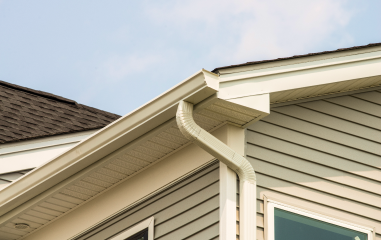
Clogged gutters are one of the most common winter roofing problems. When water cannot flow freely through gutters and downspouts, it backs up and can seep under shingles or overflow onto siding and foundations.
Before winter sets in, clean out leaves and debris from your gutters. Make sure downspouts direct water away from your home.
If your gutters overflow during rain, that is a sign they need attention. Proper drainage protects not only your roof, but also your walls, windows, and foundation.
4. Check Flashing Around Roof Penetrations
Flashing is the metal material installed around chimneys, skylights, vents, and roof intersections. It plays a critical role in keeping water out.
Cold weather can cause flashing to loosen or crack, especially if it was already aging. During your inspection, look for gaps, rust, or lifted edges around flashing areas.
Even a small flashing failure can allow water to enter your home. Addressing flashing issues promptly can prevent hidden water damage that worsens over time.
5. Trim Overhanging Tree Branches
Trees provide shade and curb appeal, but branches hanging over your roof can become a hazard in winter.
High winds or storms can cause branches to scrape shingles or break off entirely. Even smaller limbs rubbing against your roof can wear down protective granules over time.
Trim branches back so they are not touching or hovering directly over your roof. This reduces the risk of tree damage and limits the amount of debris that ends up on your roof and in your gutters.
6. Watch for Signs of Wind Damage
Winter storms often bring strong winds, even when temperatures stay mild. Wind can lift shingles, loosen flashing, and expose vulnerable areas of your roof.
After a storm, look for shingles that appear lifted, creased, or missing. Check your yard for granules or shingle pieces, which may indicate roof damage.
Wind damage is not always obvious right away, but it can lead to leaks if left unaddressed. A timely inspection after storms helps ensure small issues do not escalate.

7. Make Sure Your Attic Is Properly Ventilated
Roof health is closely tied to what is happening in your attic. Poor ventilation can cause moisture buildup, which leads to mold, wood rot, and premature roof failure.
During winter, warm air from your home can rise into the attic. If that air cannot escape properly, condensation can form on the underside of the roof.
Check that attic vents are not blocked and that insulation is evenly distributed. Proper airflow helps regulate temperature and moisture levels year-round.
8. Look for Sagging or Soft Spots
A sagging roofline or soft spots can signal structural issues or trapped moisture. These problems tend to worsen during winter when materials expand and contract.
From the ground, look for areas where the roofline dips or appears uneven. Inside the attic, watch for damp wood, mold growth, or dark staining on rafters.
If you notice sagging or softness, it is important to have a professional evaluate the roof. Structural issues should never be ignored.
9. Address Small Repairs Before They Grow
Winter is not the time to ignore minor roof problems. Small issues like a loose shingle or minor flashing damage can quickly turn into leaks when rain and wind move in.
Proactive repairs are usually faster and more affordable than emergency fixes. Handling roof maintenance now helps avoid interior water damage and costly repairs later.
Even if your roof seems mostly fine, addressing minor wear can extend its lifespan and improve performance during harsh weather.
10. Protect Roof Seals and Caulking
Seals and caulking around roof features can dry out or crack over time. Cold weather can make these materials brittle, increasing the risk of failure.
Inspect areas around vents, skylights, and chimneys for cracked or missing sealant. Reapplying or repairing these seals helps keep water out.
This simple step is often overlooked but plays a big role in preventing winter leaks.
11. Schedule a Professional Roof Inspection
While DIY inspections are helpful, a professional roof inspection provides a deeper look at your roof’s condition.
A roofing professional can identify hidden issues that may not be visible from the ground, such as subtle flashing problems or early signs of shingle failure.
Scheduling an inspection before or during winter helps ensure your roof is ready to handle seasonal stress and gives you peace of mind.
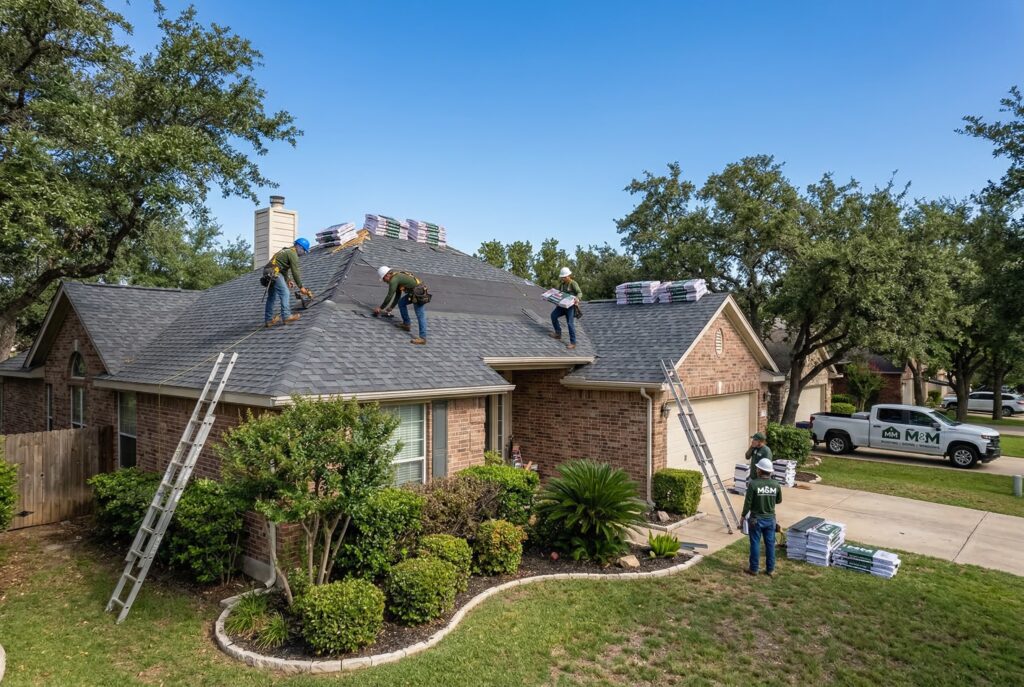
M&M Roofing, Siding, and Windows offers FREE roof inspections.
Schedule one today to ensure your roof is ready for winter.
12. Prepare for Insurance and Storm Season
Winter storms can cause unexpected damage. Being prepared makes the process easier if you need to file an insurance claim.
Document your roof’s condition with photos and keep records of maintenance or repairs. After storms, inspect your roof promptly and report damage as soon as possible.
Understanding your coverage and staying proactive can save time and frustration if weather-related damage occurs.
Why Winter Roof Maintenance Matters
Your roof is your home’s first line of defense against the elements. Winter conditions can expose weak spots that may not be noticeable during calmer seasons.
Routine winter maintenance helps prevent leaks, protects your investment, and extends the life of your roofing system. It also reduces the chance of emergency repairs when weather conditions make them more difficult and expensive.
Final Thoughts
Winter roof maintenance does not have to be overwhelming. A little attention now can prevent costly problems later and keep your home safe and dry throughout the season.
If you are unsure about your roof’s condition or notice signs of damage, give us a call today for a free roof inspection.
Taking action early is one of the smartest ways to protect your home and your peace of mind.